Overview
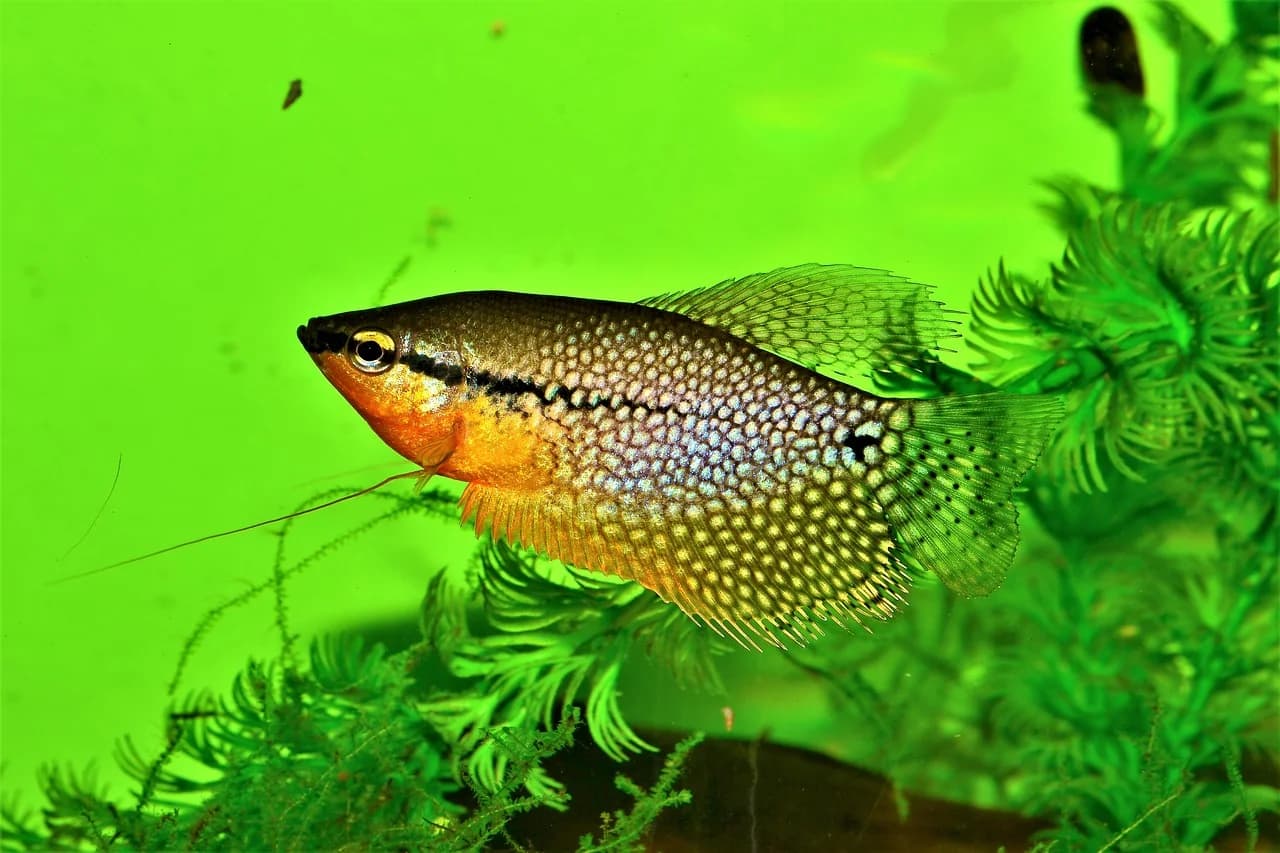
Trichopodus leerii is a freshwater labyrinth fish from the family Osphronemidae, widely regarded as one of the most beautiful representatives of the gourami genus. In the wild, this species inhabits slow-moving rivers, swamps, and flooded forests of the Malay Peninsula, Sumatra, and Borneo. The body is covered with a scattering of small pearlescent spots on a silvery-olive background, creating the appearance of scattered pearls — hence the common name. A dark, irregular stripe runs along the body from the snout to the caudal peduncle. During spawning, males develop a vivid orange-red coloration on the chest and belly. Adults reach a size of 10–15 cm. With proper care, Trichopodus leerii lives 5–7 years.
Like other labyrinth fish, the pearl gourami possesses a specialized organ — the labyrinth — that allows it to breathe atmospheric air. This adaptation enables the fish to survive in waters with low oxygen levels. The characteristic thread-like ventral fins serve as tactile organs — the fish constantly uses them to explore its surroundings.
Tank Requirements
Keeping pearl gouramis requires an aquarium of at least 150 liters for a group of one male and two to three females. Optimal water parameters: temperature 24–28 °C, pH 6.0–7.5, general hardness (GH) 5–15. Filtration should be effective but without creating strong current — in nature, these fish inhabit still and slow-moving waters.
The aquarium should be densely planted with live plants, including floating species (water lettuce, riccia, salvinia). Floating plants diffuse the light and create surface cover where males later build their bubble nests. Thickets of vallisneria, cryptocorynes, and anubias provide shelter for females and less dominant individuals. A dark substrate is preferable — it brings out the pearlescent coloration most effectively.
Important: the aquarium should be covered with a lid, leaving an air gap between the water surface and the cover. Labyrinth fish gulp air from the surface, and cold air can cause respiratory illnesses.
Feeding and Diet
Trichopodus leerii is an omnivorous species with a healthy appetite. The staple diet can consist of quality dry food in the form of flakes or small pellets. To maintain health and vibrant coloration, the menu should be regularly supplemented with live and frozen foods: bloodworms, brine shrimp, daphnia, and tubifex. The fish also readily accept plant-based supplements such as blanched lettuce leaves and spirulina.
Feed once or twice a day in small portions that are consumed within 2–3 minutes. Pearl gouramis are prone to overeating, so it is important not to overfeed. A weekly fasting day is beneficial. A varied diet promotes a strong immune system and the most vibrant coloration.
Care and Maintenance
The pearl gourami is an undemanding fish with a care level of 2 out of 5, making it an excellent choice for beginner aquarists. The key to successful keeping is stability of water parameters. Weekly water changes of 20–25 % help maintain cleanliness and prevent nitrate accumulation.
Regularly test ammonia, nitrite, and nitrate levels. Monitor the condition of the fins — deteriorating water quality can lead to bacterial infections and fin rot in gouramis. At the first signs of illness, perform an unscheduled water change and begin treatment if necessary.
Pearl gouramis are diurnal fish. They swim primarily in the upper and middle layers of the water, periodically rising to the surface for a gulp of air. Their behavior is calm, even somewhat shy — in an aquarium without hiding spots, the fish feel insecure and may lose coloration from stress.
Compatibility
Trichopodus leerii is one of the most peaceful labyrinth fish (aggression level 1 out of 5). It coexists beautifully with most peaceful species of similar size. Excellent tank mates include dwarf gouramis, honey gouramis, chocolate gouramis, peaceful tetras, rasboras, corydoras, and small plecos.
Pearl gouramis should not be kept with aggressive or overly active species — nippy barbs, large cichlids, or bettas. Fast and pugnacious tank mates will nip the gourami's long thread-like fins and cause constant stress. Keeping multiple males in the same aquarium without sufficient hiding spots is also inadvisable, as territorial skirmishes may occur.
Works well with moonlight gouramis, provided the tank volume is sufficient.
Breeding
Breeding Trichopodus leerii at home is quite achievable and is rated 3 out of 5 in difficulty. For spawning, prepare a separate aquarium of at least 50 liters with a water level of 15–20 cm, temperature of 26–28 °C, and an abundance of floating plants. Filtration should be minimal — the current must be very gentle to avoid destroying the nest.
One to two weeks before spawning, separate the breeding pair and feed them generously with live foods. A male ready to spawn builds a large bubble nest on the water surface, held together with saliva, often using floating plants as scaffolding. The construction process may take one to two days.
When the nest is ready, the male invites the female with a characteristic courtship dance. Spawning occurs beneath the nest: the male wraps his body around the female, and she releases a batch of eggs, which the male collects in his mouth and places into the nest. The process repeats multiple times — total fecundity can reach several hundred eggs.
After spawning, the female should be removed — the male takes over care of the clutch, repairing the nest and returning fallen eggs. Larvae hatch in 24–48 hours, and after another 2–3 days the fry become free-swimming. At this point, the male should also be removed. First food includes infusoria and microworms, followed by baby brine shrimp after one week.