Overview
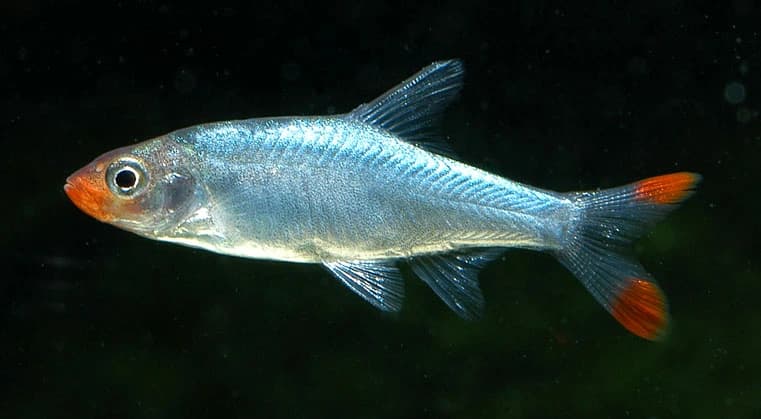
Sawbwa resplendens is the sole member of the genus Sawbwa within the family Cyprinidae, endemic to Inle Lake in Myanmar. This tiny fish, reaching only 3–4 cm in length, captivates aquarists with its striking appearance: males display a silvery-blue body with vivid red markings on the head and tail, while females are more subtly colored in olive-silver tones. Interestingly, Sawbwa resplendens is not a true rasbora — it earned this common name due to its superficial resemblance to the rummy-nose tetra.
In the wild, these fish inhabit shallow areas of Inle Lake with dense aquatic vegetation and crystal-clear water. Their natural habitat is threatened by human activity, making captive breeding particularly important for species conservation. With proper care, they live 3–5 years.
Tank Requirements
A group of 8–10 individuals requires a tank of at least 60 liters. Optimal water parameters: temperature 22–26°C, pH 6.5–7.5, general hardness (GH) 5–12. Sawbwa resplendens prefer clean, well-oxygenated water with minimal current — in nature, they inhabit still or slow-moving waters.
Plant the tank densely with live vegetation, including fine-leaved species (cabomba, hornwort) and floating plants to create diffused lighting. A dark substrate accentuates the fish's coloration. Driftwood and rocks make excellent additions, providing shelter and naturally softening the water. Avoid bright direct lighting — under moderate light, the fish feel more secure and display their best colors.
Feeding and Diet
In nature, Sawbwa resplendens feed on small invertebrates, algae, and microorganisms. In the aquarium, they accept quality dry foods — micro-pellets and crushed flakes. However, live and frozen foods should form the core of their diet: baby brine shrimp, daphnia, cyclops, and micro worms. This type of nutrition is key to maintaining the vivid red pigmentation on the head and tail.
Feed twice daily in small portions that the fish consume within 2–3 minutes. Keep in mind that these miniature fish have small mouths, so food must be appropriately sized. Dietary variety is essential for health and vibrant coloration.
Care and Maintenance
Sawbwa resplendens is a relatively undemanding species provided water parameters remain stable. Weekly water changes of 20–25% are essential. Use a quality filter with gentle flow — strong currents stress these fish. A sponge filter is the optimal choice: it provides biological filtration without creating a dangerous current for small fish.
These fish are sensitive to sudden fluctuations in water parameters. Use aged water at the same temperature when performing changes. Keep nitrate levels below 20 mg/l. Test water parameters regularly, especially during the first months after the tank is established.
Compatibility
Sawbwa resplendens are peaceful schooling fish that should be kept in groups of at least 8. Within the school, a natural hierarchy forms, with males displaying fascinating behavior as they compete for female attention and show their finest colors.
Ideal tankmates are small peaceful species of similar size: Danio erythromicron (a fellow Inle Lake native), chili rasbora, celestial pearl danio, pygmy corydoras. They coexist well with otocinclus and small shrimp (Neocaridina).
Avoid larger or active fish — black skirt tetras, large barbs, or cichlids. These will stress the sawbwa and outcompete them for food. Also avoid fish that require strong water flow.
Breeding
Breeding Sawbwa resplendens in the aquarium is quite achievable, though it requires some preparation. The fish scatter eggs among fine-leaved plants and show no parental care.
For spawning, set up a separate 20–30 liter tank with soft water (GH 3–6, pH 6.5–7.0) and a temperature of 24–26°C. Place clumps of Java moss or synthetic spawning mops as substrate. Select a well-colored pair and feed them abundantly with live food for 1–2 weeks before introducing them to the breeding tank.
After spawning, remove the adults promptly — they will readily eat their own eggs. The eggs are small and transparent, with incubation lasting 3–5 days. Newly hatched larvae feed on their yolk sacs for the first day, after which they should be offered infusoria and micro worms. After 7–10 days, the fry can accept baby brine shrimp. Growth is slow — adult coloration typically appears at 3–4 months of age.