Overview
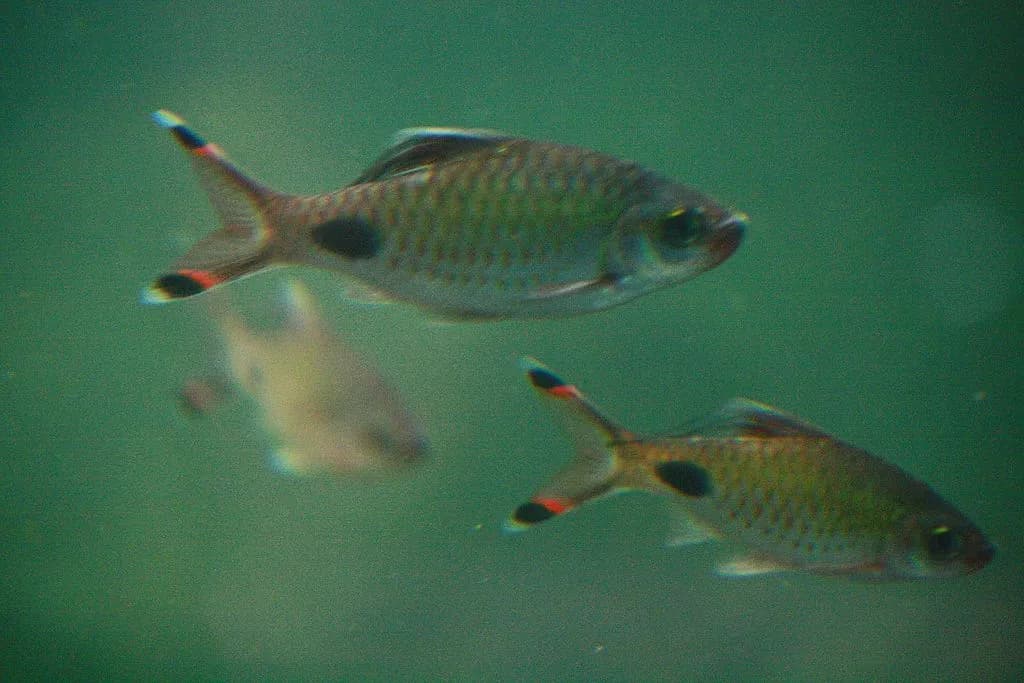
Puntius mahecola, commonly known as the Mahecola Barb, is a member of the Cyprinidae family endemic to rivers in India and Sri Lanka. This species is far less commonly encountered in the hobby than its more popular relatives such as the Denison Barb, yet it deserves attention for its hardiness and gentle temperament.
The Mahecola Barb reaches a size of 6–8 cm and possesses an elegant silvery body with subtle vertical bars. The fins display a characteristic reddish tint that becomes more pronounced under good care and a balanced diet. This is a diurnal fish with active but entirely peaceful behavior, making it an excellent candidate for community aquariums.
Tank Requirements
A group of Mahecola Barbs requires an aquarium of at least 75 liters (20 gallons). These fish are active swimmers that prefer the middle and upper water layers, so it is important to provide ample open space for the school to move freely.
Optimal water parameters:
- Temperature: 22–28°C (72–82°F)
- pH: 6.0–7.5
- General Hardness (GH): 5–18
The aquarium should be decorated with live plants, creating areas of dense vegetation along the sides and back while leaving the center open for swimming. Floating plants will help diffuse the light and create a comfortable environment. A dark substrate is preferable, as it makes the silvery coloration of the fish more striking. A tight-fitting lid is essential, as barbs are capable of jumping out of the water.
Feeding and Diet
In the wild, Puntius mahecola feeds on small invertebrates, algae, plant matter, and organic detritus. In the aquarium, this is an omnivorous and undemanding species when it comes to food.
The staple diet can consist of high-quality flakes or small pellets. To maintain good health and vibrant coloration, supplement their diet regularly with live or frozen foods such as brine shrimp, daphnia, and bloodworms. Vegetable supplements in the form of blanched spinach, zucchini, or spirulina-based foods are also beneficial.
Feed 2–3 times daily in small portions that the fish consume within 2–3 minutes. A varied diet is the key to strong immunity and rich coloration in these barbs.
Care and Maintenance
The Mahecola Barb is one of the easiest barb species to keep, making it an excellent choice for beginner aquarists. The care level is rated as easy, and under good conditions, these fish live for 3–5 years.
The key rule is to keep Puntius mahecola in a school of at least 6 individuals. In a group, the fish feel confident, display natural behavior, and show more vivid coloration. Solitary specimens or pairs become timid and prone to stress.
Weekly water changes of 20–25% will help maintain stable parameters and a healthy environment. Good filtration with moderate flow is necessary, mimicking the natural conditions of their riverine habitat. Regularly test ammonia and nitrite levels — both should remain at zero.
Compatibility
The Mahecola Barb is an exceptionally peaceful fish that coexists well with most non-aggressive species of similar size. It is an ideal inhabitant of a community aquarium.
Excellent tankmates include:
- Neon Tetras and other small tetras
- Harlequin Rasboras
- Zebra Danios
- Bronze Corydoras and other peaceful bottom dwellers
- Small peaceful gouramis
Avoid keeping them with large or aggressive cichlids, as well as fish that significantly exceed the barbs in size. Despite their peaceful nature, it is not recommended to house them with fish that have long, flowing fins, as barbs may show interest in nipping them.
Breeding
Breeding Puntius mahecola in the home aquarium is possible, though it requires some preparation. The breeding difficulty is rated as moderate.
For spawning, prepare a separate tank of 30–40 liters (8–10 gallons) with soft, slightly acidic water (pH 6.0–6.5, temperature 25–27°C / 77–81°F). Place fine-leaved plants such as Java moss or a spawning mop on the bottom — this will protect the eggs from being eaten by the parents.
Puntius mahecola is an egg-scattering species. The female disperses eggs among the plants, and the male fertilizes them. After spawning is complete, the adults must be removed from the breeding tank, as they are prone to eating their own eggs.
The eggs hatch within 24–48 hours, and the fry become free-swimming after another 2–3 days. Initial food should be infusoria or liquid fry food. As the young grow, they can be transitioned to baby brine shrimp and then to finely crushed dry foods.