Overview
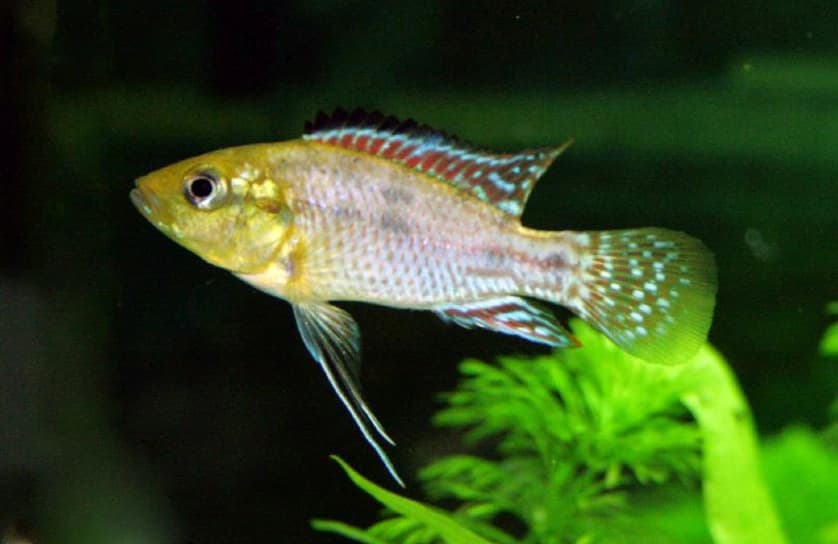
Pseudocrenilabrus multicolor is one of the first cichlids ever kept in home aquariums, with records of its captive care dating back to the early 1900s. This species belongs to the family Cichlidae and inhabits freshwater bodies across Eastern and Northeastern Africa — from the Nile basin to the lakes of Uganda and Kenya. In the wild, it occupies shallow, densely vegetated areas of rivers, lakes, and swamps.
Adults reach 5–7 cm in length and live 5–7 years with proper care. Males are significantly more colorful than females: their bodies shimmer with iridescent shades of blue, green, and yellow, while their anal fins display distinctive orange-red egg spots (ocelli). Females are more modestly colored in silvery-beige tones, which helps them remain inconspicuous during the brooding period.
The defining feature of this species is maternal mouthbrooding — the female incubates fertilized eggs inside her mouth. This remarkable behavior earned Pseudocrenilabrus multicolor its common names: "Egyptian Mouthbrooder" and "Multicolored Mouthbrooder." Its hardiness, compact size, and captivating behavior make this fish an excellent choice for aquarists of any experience level.
Tank Requirements
A pair of Pseudocrenilabrus multicolor requires an aquarium of at least 60 liters. If you plan to keep a small group of one male and several females, opt for a tank of 100 liters or more — this will help reduce territorial conflicts.
Optimal water parameters:
- Temperature: 22–28 °C
- General hardness (GH): 8–15
- pH: 6.5–7.5
One of the greatest advantages of this species is its remarkable adaptability to varying water conditions. These fish tolerate fluctuations in water parameters well, making them a forgiving choice for beginners.
For the aquascape, use a sandy or fine gravel substrate, plenty of live plants (such as Vallisneria, Anubias, and Java moss), and shelters made from rocks and driftwood. Caves and grottos are especially important — they serve as territorial markers and refuges for brooding females. Moderate or subdued lighting is preferred, mimicking the fish's natural habitat.
Feeding and Diet
Pseudocrenilabrus multicolor is an omnivorous species with an excellent appetite. In the wild, these fish feed on small invertebrates, insect larvae, and algal growth. In the aquarium, the staple diet should consist of high-quality flakes or small cichlid pellets.
To maintain vibrant coloration and robust health, regularly supplement dry food with live and frozen options:
- Brine shrimp (both nauplii and adults)
- Daphnia
- Bloodworms (in moderation)
- Cyclops
Vegetable supplements are also beneficial: blanched spinach, cucumber slices, or spirulina-based foods. Feed 2–3 times daily in small portions that the fish consume within 2–3 minutes. Note that the female does not eat during the egg incubation period, so it is important to feed her well before spawning.
Care and Maintenance
Caring for Pseudocrenilabrus multicolor is straightforward, even for a beginner aquarist. The key principle is maintaining stable water parameters and a clean aquarium.
Core recommendations:
- Water changes: 20–25 % weekly
- Filtration: moderate flow; an internal filter or a small canister filter will suffice
- Parameter monitoring: regularly test pH, hardness, and nitrate levels
- Aeration: ensure adequate oxygen saturation
These fish are diurnal and most active during daylight hours. Males periodically engage in territorial displays, flaring their fins and showing off their vivid colors — this is normal behavior and requires no intervention. Make sure the tank provides enough hiding spots for females, especially during the breeding season.
Compatibility
Pseudocrenilabrus multicolor is a moderately territorial species. Outside of the breeding period, these fish behave quite peacefully and are well-suited for community tanks with appropriately sized and tempered tankmates.
Good tankmates include:
Avoid housing them with:
- Large, aggressive cichlids
- Slow-moving fish with long, flowing fins
- Very small species that may become targets
During spawning, the male actively defends his territory, so ensure the aquarium is spacious enough and contains zones separated by decorations. Keeping one male with two to three females is the optimal ratio, reducing pressure on individual fish.
Breeding
Breeding Pseudocrenilabrus multicolor is one of the most rewarding experiences for an aquarist, and it requires minimal effort. This species is a true maternal mouthbrooder: the female collects the fertilized eggs in her mouth and incubates them for 10–14 days.
Spawning proceeds as follows: the male selects a patch of substrate, cleans it, and begins actively displaying his coloration to attract a female. After the eggs are laid and fertilized, the female gathers them into her buccal cavity. A single clutch typically contains 30 to 80 eggs, depending on the female's size and age.
During incubation, the female does not eat and tends to stay hidden in sheltered areas. At the end of the brooding period, she releases fully formed fry that are already capable of swimming and feeding independently. For the first few days, the fry may retreat into the mother's mouth when they sense danger.
First foods for the fry:
- Brine shrimp nauplii
- Microworms
- Finely crushed dry food
For maximum fry survival, it is recommended to move the brooding female to a separate rearing tank of 20–30 liters. Pseudocrenilabrus multicolor reaches sexual maturity at 4–6 months of age, and under good conditions, spawning occurs regularly.