Overview
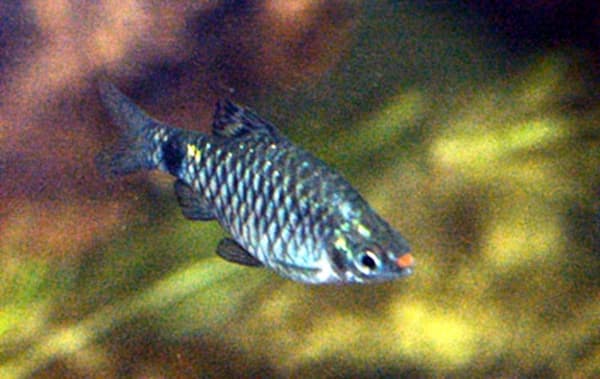
Pethia erythromycter is a small freshwater fish from the Cyprinidae family, native to mountain streams and small rivers of Myanmar. The species name translates to "red nose," which accurately describes its most striking feature — a vivid red patch on the tip of the snout. The body is silvery-olive with a subtle golden sheen and dark spots at the base of the caudal fin.
Adults reach a size of 4-5 cm, making this species an ideal inhabitant for smaller aquariums. In the wild, Pethia erythromycter prefers clean waterways with moderate current and rocky bottoms overgrown with aquatic vegetation. This is a schooling fish with a peaceful temperament, and its lifespan in an aquarium is 3-5 years with proper care.
Tank Requirements
A group of Pethia erythromycter requires an aquarium of at least 60 liters. Water temperature should be maintained between 22-26°C, pH levels from 6.0 to 7.5, and general hardness (GH) within 5-12. These parameters mirror the conditions found in the mountain streams where this species originates.
For the aquascape, I recommend using fine gravel or sand as substrate, complemented by smooth stones and driftwood. Be sure to include live plants — Java moss, cryptocorynes, and anubias will create natural hiding spots and shaded areas. These fish actively swim in the middle and upper water layers, so it is important to leave enough open space for swimming.
Filtration should be efficient but without excessively strong current. A small internal filter or a hang-on-back filter with adjustable flow will work best. Aeration is essential — these fish prefer well-oxygenated water.
Feeding and Diet
Pethia erythromycter is an omnivorous species with a strong preference for animal-based foods. In the wild, they feed on small invertebrates, insect larvae, and algae.
In the aquarium, high-quality flakes or micro-pellets for small tropical fish can form the staple diet. However, to maintain vibrant coloration and good health, it is important to regularly supplement with live or frozen foods: daphnia, brine shrimp, cyclops, and small bloodworms. From my experience, the red nose patch becomes most intense when the diet is varied.
Feed the fish 2-3 times daily in small portions that they consume within 2-3 minutes. Overfeeding leads to obesity and deteriorating water quality, so it is better to underfeed than overfeed.
Care and Maintenance
Keeping Pethia erythromycter is straightforward and suitable even for beginning aquarists. The primary rule is stability of water parameters. Weekly water changes of 20-25% will help maintain cleanliness and prevent nitrate buildup.
Test water parameters regularly — monitoring ammonia and nitrite levels is particularly important, and both should remain at zero. Vacuum the substrate during water changes to remove leftover food and waste products.
These fish are fairly hardy but can be susceptible to common tropical fish diseases such as ich and bacterial infections. Quarantining new fish before introducing them to the main tank is an essential preventive measure. If signs of illness appear (white spots, lethargy, loss of appetite), treatment should begin immediately.
Compatibility
Pethia erythromycter is a peaceful schooling fish that should be kept in groups of at least 6-8 individuals. In a school, the fish feel more confident, display natural behavior, and show brighter coloration.
Excellent tankmates for Red-nosed Barbs include other peaceful species of similar size: rasboras, small danios, cherry barbs, Odessa barbs, and white cloud minnows. They also coexist beautifully with peaceful bottom-dwellers such as corydoras and small loaches.
Avoid housing them with large or aggressive species such as cichlids, large barbs (the tiger barb can be troublesome, nipping fins), and predatory fish. It is also best to avoid keeping them with slow-moving, long-finned species, as the active barbs may stress them with their rapid swimming.
Breeding
Breeding Pethia erythromycter in the aquarium is moderately challenging. They are typical egg scatterers that show no parental care.
For spawning, prepare a separate tank of 20-30 liters with soft, slightly acidic water (pH 6.0-6.5, GH 4-8) and a temperature of 24-26°C. Place a mesh or fine-leaved plants — Java moss, cabomba — on the bottom to protect the eggs from being eaten by the parents. Lighting should be subdued.
Select the most brightly colored male and a female with a rounded belly. Spawning typically occurs in the morning hours. After spawning is complete, remove the adults immediately, as they will readily consume their own eggs.
The eggs develop within 24-48 hours. Newly hatched fry feed on their yolk sacs for the first few days, then transition to infusoria and brine shrimp nauplii. Fry grow relatively slowly, and maintaining impeccable water quality in the breeding tank along with frequent but small feedings is crucial for successful rearing.