Overview
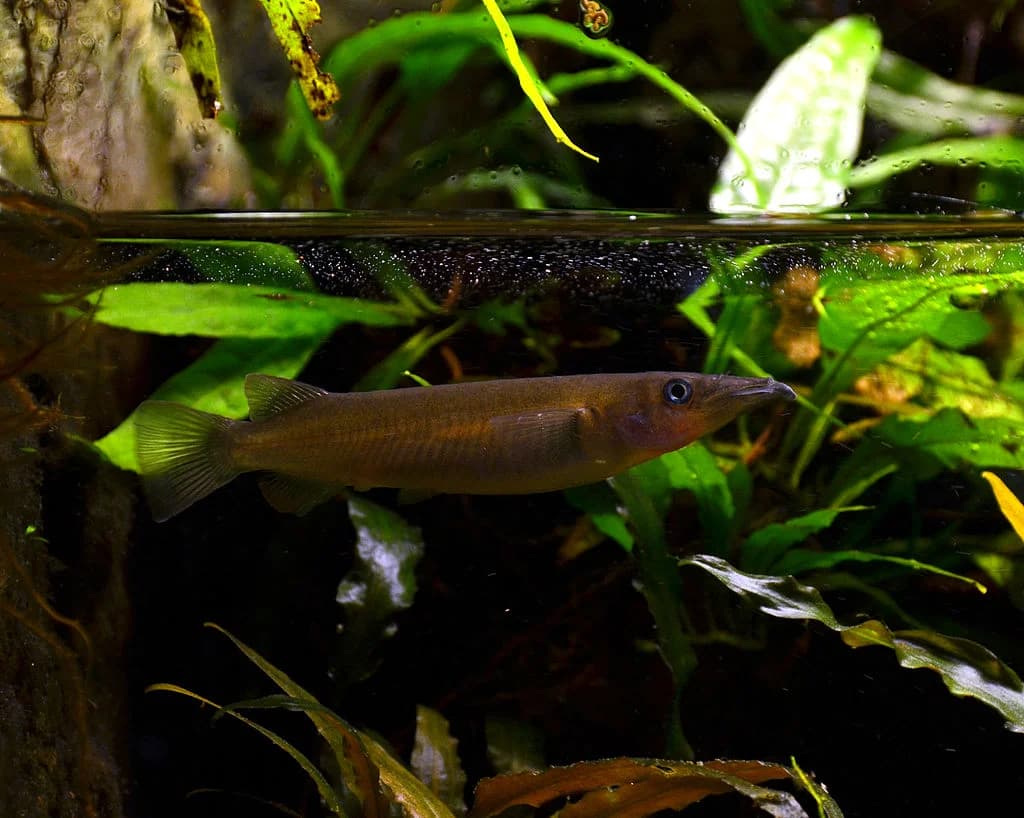
Nomorhamphus liemi is a small livebearing fish from the family Zenarchopteridae, endemic to highland streams on the island of Sulawesi (Celebes), Indonesia. The most distinctive feature of this species is its characteristic "half-beak" — an elongated lower jaw that extends well beyond the upper jaw. Males possess a fleshy red-and-black appendage at the tip of the lower jaw, which is used for courtship displays.
The body is streamlined and silver-grey, reaching 6–8 cm in length. Nomorhamphus liemi inhabits the water surface and is active during the day. Unlike most tropical fish, this species prefers moderately hard, slightly alkaline water, which reflects the conditions of the highland streams in its native range. Lifespan in an aquarium is 3–5 years.
Tank Requirements
A tank of at least 60 litres is suitable for keeping Nomorhamphus liemi. Optimal water parameters are: temperature 22–28 °C, pH 7.0–8.0, and general hardness GH 10–20. These fish prefer moderate water flow that mimics highland stream conditions.
The aquarium should be densely planted, including floating plants that create shaded areas near the surface. This helps the fish feel secure and reduces stress. A tight-fitting lid is essential — halfbeaks are excellent jumpers and can easily escape from an uncovered tank. It is advisable to leave an air gap of several centimetres between the lid and the water surface.
Feeding and Diet
In the wild, Nomorhamphus liemi feeds at the water surface, consuming small insects, their larvae, and invertebrates that have fallen onto the water. In the aquarium, the diet should include high-quality flakes and pellets for surface-feeding fish, as well as live and frozen foods: brine shrimp, daphnia, bloodworms, and mosquito larvae.
It is particularly beneficial to occasionally offer small insects (fruit flies, gnats), which closely replicate the natural diet. Feed small portions 2–3 times a day. Food should remain on the surface, as halfbeaks very rarely pick up food from the bottom.
Care and Maintenance
Caring for Nomorhamphus liemi requires attention to water quality. Weekly water changes of 20–30 % are essential for maintaining stable parameters. Efficient filtration with moderate flow is necessary, as the fish are sensitive to the accumulation of organic waste.
Water parameters should be checked regularly, with special attention to hardness and pH, since halfbeaks do not tolerate soft, acidic water well. It is important to inspect the tank lid for any gaps that could serve as escape routes. With proper care, these fish rarely fall ill and reward the keeper with active surface-level behaviour.
Compatibility
Nomorhamphus liemi is a relatively peaceful species, though males can be aggressive toward one another. The ideal arrangement is one male with several females (a ratio of 1:3–4). Suitable tank mates include peaceful fish that occupy the middle and lower levels: corydoras catfish, rasboras, and small tetras.
Avoid keeping halfbeaks with large aggressive species or with fish that compete for the surface layer. Very small fish that halfbeaks might view as prey are also unsuitable. Good companions include livebearers with similar water hardness requirements, such as mollies.
Breeding
Nomorhamphus liemi is one of the few livebearing species outside the family Poeciliidae. Males possess a modified anal fin called an andropodium, which is used for internal fertilisation. Males are easily identified by this fin and the red-and-black fleshy appendage on their lower jaw; females are larger with more rounded bellies.
Gestation lasts approximately 6–8 weeks. The female gives birth to 5–20 fully formed fry. For successful breeding, provide dense vegetation and floating plants where the fry can hide from adult fish. Newborn fry should ideally be moved to a separate rearing tank and fed with brine shrimp nauplii and finely crushed flakes. Fry grow relatively quickly and reach sexual maturity at 4–6 months of age.