Overview
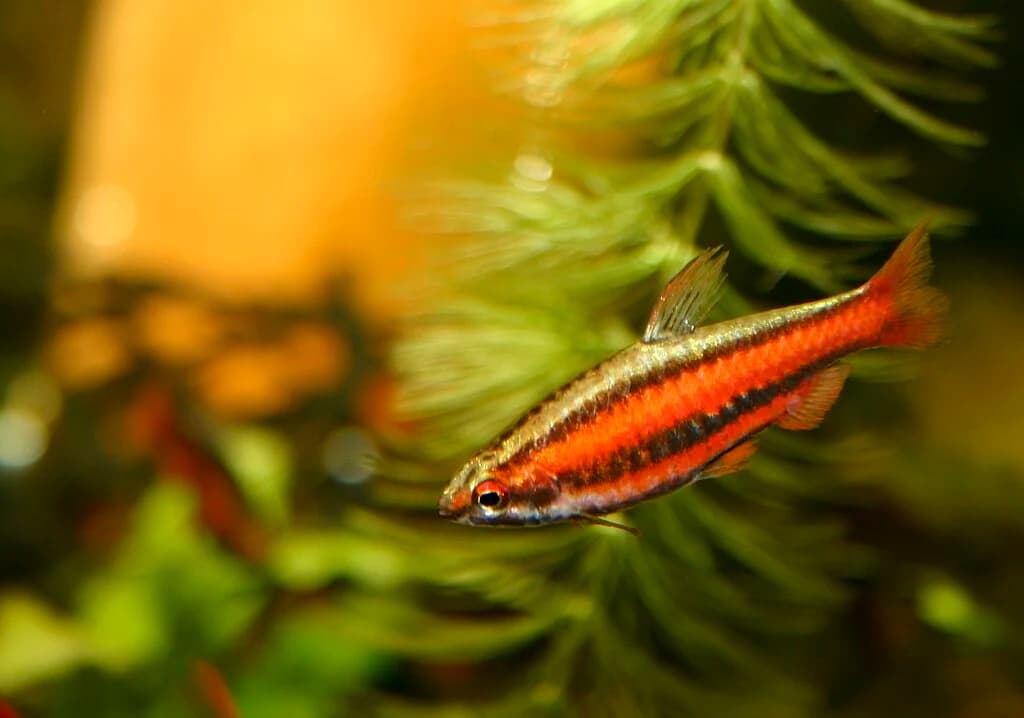
Nannostomus mortenthaleri is one of the most strikingly colored members of the pencilfish genus within the family Lebiasinidae. This miniature species was discovered in the Rio Nanay basin near Iquitos, Peru. Despite reaching only 3-4 cm in length, it captivates aquarists with a brilliant coral-red horizontal band running along its dark, nearly black body. This bold contrast makes the Coral Red Pencilfish a true showpiece in any planted aquarium.
In the wild, Nannostomus mortenthaleri inhabits warm, slow-moving blackwater streams characterized by soft, acidic water, abundant leaf litter, and heavy shade. Like other pencilfish species such as the Dwarf Pencilfish and Brown Pencilfish, this species prefers a calm environment with subdued lighting.
Tank Requirements
A group of Nannostomus mortenthaleri requires an aquarium of at least 60 liters. Optimal water parameters include a temperature of 24-28 °C, general hardness (GH) of 1-10, and pH of 5.0-7.0. As a typical blackwater inhabitant, this species is most comfortable in soft, acidic conditions.
The aquarium should be densely planted with live vegetation and include floating plants to create shaded areas. Adding driftwood and dried leaves (such as Indian almond leaves) helps tint the water slightly brown and recreate conditions close to the natural habitat. Filtration should be gentle, without strong current, and lighting should be kept dim.
Feeding and Diet
In the wild, Nannostomus mortenthaleri feeds on small invertebrates and zooplankton. In the aquarium, these fish readily accept high-quality micro pellets and flakes, but the core of their diet should consist of live and frozen foods: daphnia, baby brine shrimp, cyclops, and small bloodworms.
Due to their small mouth size, it is important to offer appropriately sized food particles. Feeding 2-3 times a day in small portions is recommended. A varied, high-quality diet helps maintain the vivid coral-red coloration, which noticeably fades with poor nutrition.
Care and Maintenance
Nannostomus mortenthaleri is a relatively undemanding species, provided that water parameters remain stable. Weekly water changes of 20-25 % are recommended to maintain cleanliness and stability. It is important to use water prepared to the proper softness and acidity levels during changes.
Coral Red Pencilfish are best kept in groups of 8-10 or more. In a school, the fish feel more confident, display brighter coloration, and exhibit fascinating natural behaviors. Males tend to establish a hierarchy and regularly engage in ritualized sparring displays — they flare their fins and show off their vibrant colors to rivals. Despite the drama of these encounters, they are purely ritualistic and cause no harm. Providing sufficient hiding spots and space helps reduce overall stress levels.
Compatibility
Nannostomus mortenthaleri is a peaceful species well suited for community aquariums with other calm fish of similar size. Excellent tank mates include small characins such as the Cardinal Tetra or Neon Tetra, as well as small corydoras like the Pygmy Corydoras. Dwarf cichlids from the Apistogramma genus can also make suitable companions, provided the tank is large enough.
These fish should not be kept with large or active species that may outcompete them for food or cause stress. Aggressive tank mates capable of harming the delicate pencilfish should also be avoided.
Breeding
Breeding Nannostomus mortenthaleri in the aquarium presents a moderate challenge. A separate breeding tank with very soft, acidic water (pH 5.0-6.0, GH 1-4) and a temperature of 26-28 °C is required. The bottom should be furnished with fine-leaved plants or spawning substrate — Java moss works best for this purpose.
Breeding pairs should be conditioned with generous live food feedings for 1-2 weeks prior to spawning. Spawning typically occurs in the morning hours. After eggs are laid, the adults must be removed, as they tend to eat their own eggs. Incubation takes approximately 24-36 hours, and fry should initially be fed infusoria and microworms, gradually transitioning to baby brine shrimp as they grow.