Overview
Melanochromis auratus is a vibrant and extremely territorial mbuna cichlid native to the southern coast of Lake Malawi. This fish belongs to the family Cichlidae and reaches a size of 10-12 cm with a lifespan of 5-7 years.
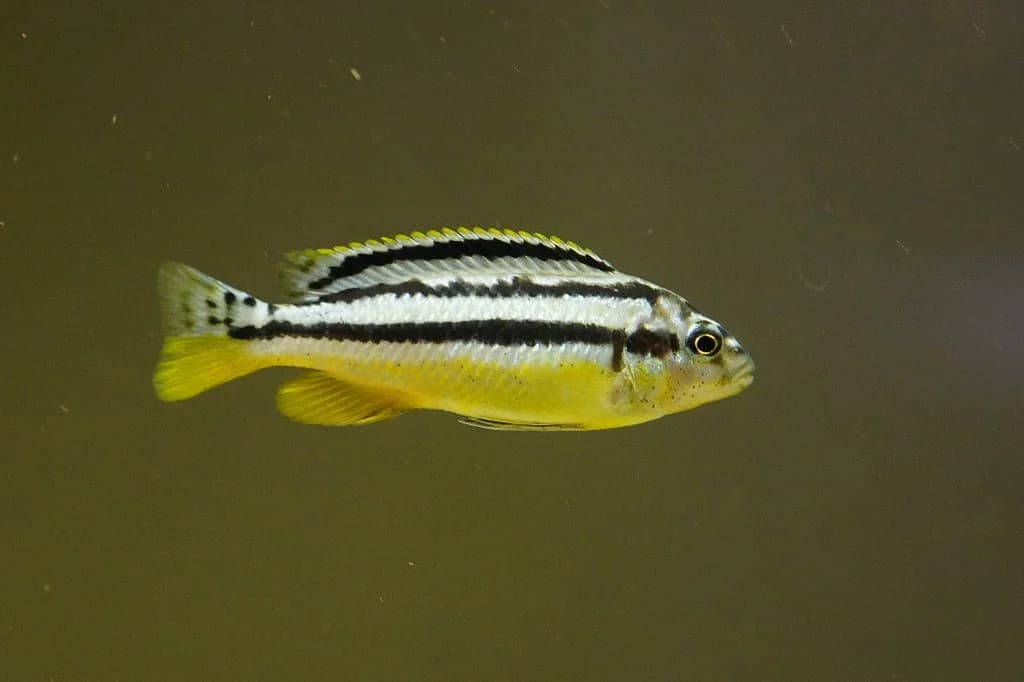
The most distinctive feature of Melanochromis auratus is its dramatic sexual dimorphism in coloration. Females and juveniles display a bright golden-yellow body with bold black and white horizontal stripes running along the body. As males mature, they undergo a remarkable color reversal: their body turns dark black or dark brown with light blue-white stripes. This color inversion is one of the most striking among all Lake Malawi cichlids.
Despite its compact size, Melanochromis auratus is considered one of the most aggressive mbuna cichlids. This species is absolutely not suitable for beginners and requires an experienced approach to keeping.
Tank Requirements
Melanochromis auratus requires an aquarium of at least 150 liters. Water parameters should replicate Lake Malawi conditions: temperature 24-28°C, pH 7.5-8.5, and general hardness (GH) 10-20.
The aquarium setup must include a large number of rocks and stone formations creating numerous caves and hiding spots. This is critically important for reducing aggression levels and providing subordinate fish with refuges from the dominant male. A sandy substrate is preferred as it mimics the natural Lake Malawi biotope. Live plants are generally unsuitable since mbuna tend to uproot and eat them.
Powerful filtration is essential — Lake Malawi cichlids are sensitive to water quality and require high levels of dissolved oxygen. An external canister filter with a turnover rate of at least 4-5 tank volumes per hour is recommended.
Feeding and Diet
In the wild, Melanochromis auratus is primarily herbivorous, feeding on algae growing on rocks. In the aquarium, the diet should be based on foods with high vegetable content: spirulina-based pellets, flakes for herbivorous cichlids, and blanched vegetables (zucchini, spinach, peas).
It is critically important to avoid excessive protein in the diet. Melanochromis auratus, like other mbuna, is prone to Malawi bloat — a dangerous condition that often develops when the diet is dominated by animal proteins. Live and frozen foods (brine shrimp, bloodworms) should be offered only occasionally and in small amounts.
Feeding 2-3 times daily in small portions that are consumed within 2-3 minutes is recommended.
Care and Maintenance
Weekly water changes of 25-30% are necessary to maintain stable parameters and prevent nitrate accumulation. Regular monitoring of pH and hardness is especially important, as Malawi cichlids are extremely sensitive to fluctuations in water parameters.
Close observation of fish behavior is essential. The dominant male Melanochromis auratus can exhibit extreme aggression, including persistent chasing that may result in the death of tank mates. If signs of excessive stress appear in individual fish, it may be necessary to remove them or rearrange the decorations to break up established territories.
Watch carefully for signs of Malawi bloat: loss of appetite, abdominal swelling, rapid breathing, and white stringy feces. At the first symptoms, immediately adjust the diet and begin treatment if necessary.
Compatibility
Melanochromis auratus is one of the most aggressive mbuna cichlids, which significantly limits the choice of tank mates. Keeping them with peaceful or small fish is strictly out of the question.
The best companions are other aggressive and hardy mbuna species: Pseudotropheus Zebra, Yellow Lab, Demasoni Cichlid, and Trewavas's Mbuna. It is important to avoid keeping them with the closely related Melanochromis Johannii, as hybridization may occur.
It is recommended to keep one male with several females (ratio of 1:3-4) to distribute aggression. Deliberate overstocking is a conscious strategy for mbuna aquariums, helping to spread aggression among a larger number of fish and preventing the dominant male from focusing on a single target.
Breeding
Melanochromis auratus is a maternal mouthbrooder, and breeding in the aquarium is not particularly difficult given the right conditions. The male attracts the female with a vivid display of coloration and a characteristic dance at his chosen spawning site.
After spawning, the female collects the fertilized eggs in her mouth and incubates them for 18-25 days. During this period, the female does not eat, so it is important that she is in good condition before spawning begins. The released fry are fully formed and capable of feeding independently.
Fry can be fed crushed spirulina-based pellets and baby brine shrimp (Artemia nauplii). To improve fry survival rates, it is recommended to move the holding female to a separate breeding tank or use a breeder box within the main aquarium. Juveniles display the golden-yellow female coloration, and the sex-related color differences begin to appear as they mature.