Overview
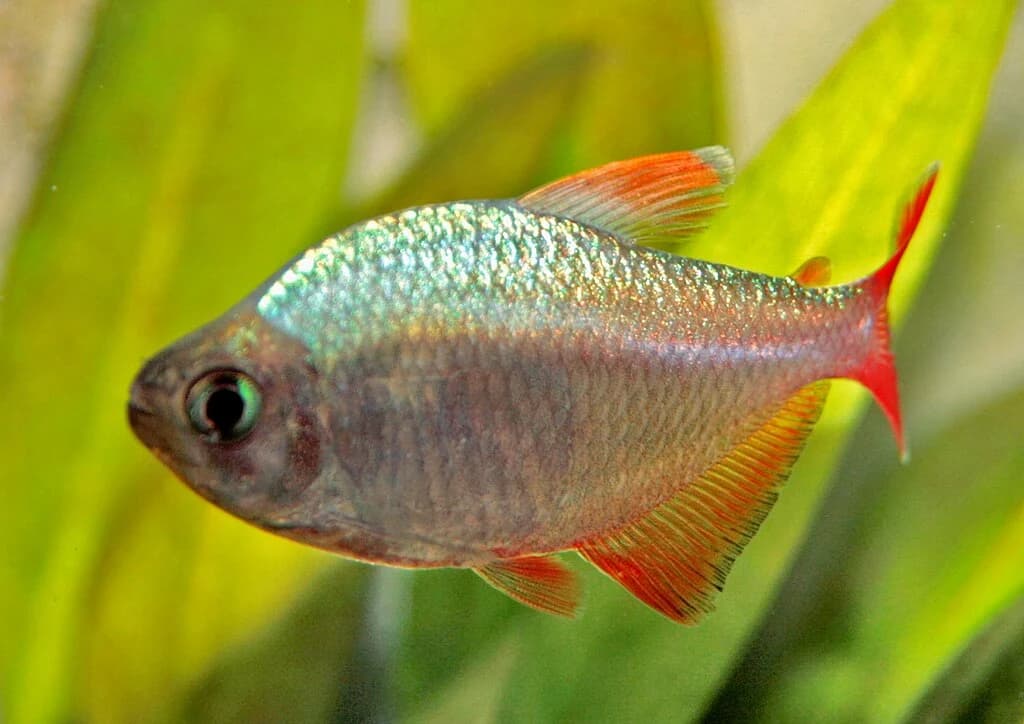
Hyphessobrycon columbianus is one of the most visually striking members of the Characidae family, originating from the rivers of northern Colombia. In the wild, this species inhabits slow-flowing tributaries with dense shoreline vegetation. The body displays a rich silvery-blue color with a distinctive metallic sheen, while the caudal and anal fins feature a vivid red hue. It is precisely this contrasting blue-red coloration that makes the Colombian Tetra one of the most attractive characins in the aquarium hobby.
Adults reach a size of 6-7 cm, making them slightly larger than many popular tetras such as neon tetras or ember tetras. Lifespan in an aquarium is 3-5 years with proper care. This is a diurnal schooling fish that should be kept in groups of at least 6-8 individuals — it is within a school that Colombian Tetras reveal their full coloration and display fascinating social behavior.
Tank Requirements
A school of Colombian Tetras requires an aquarium of at least 80 liters. Optimal water parameters are: temperature 23-27°C, pH 6.0-7.5, and hardness GH 5-15. The species is quite adaptable regarding water chemistry, making it a convenient choice for beginner aquarists.
The aquarium is best arranged with plenty of live plants while leaving sufficient open swimming space in the middle water layers. Floating plants will create diffused lighting under which the fish look most impressive. A dark substrate and moderate lighting further accentuate the metallic sheen of their scales. Filtration should be efficient but without excessive current — in nature, this species prefers calm waters.
Feeding and Diet
Hyphessobrycon columbianus is an omnivorous species that presents no feeding challenges. The staple diet can consist of high-quality flakes or micro-pellets for tropical fish. To maintain vibrant coloration and good health, it is important to regularly supplement the menu with live or frozen foods: bloodworms, daphnia, brine shrimp, and cyclops.
Feeding 2-3 times daily in small portions that the fish consume within 2-3 minutes is recommended. Dietary variety has a positive effect on color intensity and overall fish condition. Vegetable supplements such as spirulina or blanched spinach leaves are also beneficial.
Care and Maintenance
The Colombian Tetra is an undemanding species with a care difficulty level of 2 out of 5, making it an excellent choice for aquarists with limited experience. The foundation of successful keeping is water parameter stability and regular aquarium maintenance.
Weekly water changes of 25-30% will help maintain water quality at the proper level. It is important to monitor ammonia and nitrite levels, which should remain at zero, while nitrates should not exceed 20-30 mg/l. Under these conditions, the fish exhibit robust health and disease resistance. Nevertheless, regular observation of behavior and appearance is advisable — fading coloration or lethargy may indicate water quality issues or the onset of illness.
Compatibility
The Colombian Tetra has a peaceful temperament (aggression level 2 out of 5) and is perfectly suited for community aquariums. The best tankmates are other small, peaceful species: cardinal tetras, neon tetras, phantom tetras, harlequin rasboras, and corydoras as bottom dwellers.
Keeping them in a school of 6-8 or more reduces stress and prevents possible fin-nipping of slower tankmates — males may occasionally display mild assertiveness in small groups. Avoid housing them with large or aggressive species that might view the tetras as prey.
Breeding
Breeding Hyphessobrycon columbianus at home requires some experience (difficulty 3 out of 5). A separate breeding tank of 20-30 liters with soft, slightly acidic water (pH 6.0-6.5) and a temperature of 26-27°C is recommended for spawning. Fine-leaved plants such as java moss or cabomba, or a synthetic spawning mop, serve well as egg-laying substrate.
Before spawning, it is advisable to separate the breeding pair for 1-2 weeks and feed them generously with live foods. Spawning typically occurs in the morning hours. After egg laying, the adults must be removed as they are prone to eating their own eggs. Larvae hatch within 24-36 hours, and after 3-4 days the fry begin swimming freely. Starter foods include infusoria and artemia nauplii.