Overview
The Buenos Aires Tetra (Hyphessobrycon anisitsi) is one of the most resilient and undemanding tetras available in the aquarium hobby. This species belongs to the family Characidae and originates from the La Plata River basin, spanning Argentina, Paraguay, and southern Brazil. In the wild, these fish inhabit slow-moving rivers, streams, and backwaters with diverse vegetation.
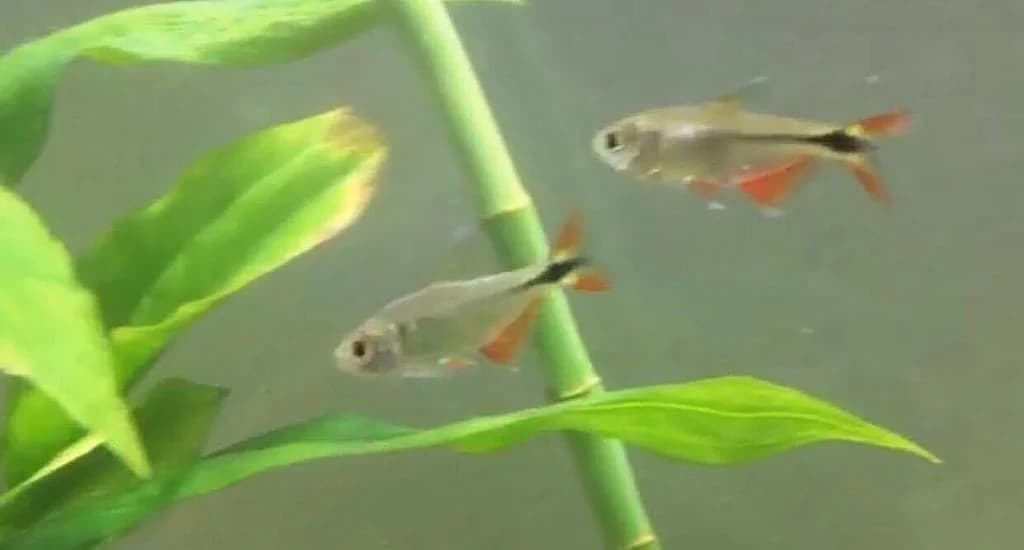
The Buenos Aires Tetra has an elongated, slightly laterally compressed body with a silvery coloration and a bluish sheen. Its most distinctive features are the bright red-orange caudal fin and a dark diamond-shaped spot at the base of the tail. Adults reach a size of 4-5 cm. With proper care, their lifespan is 3-5 years.
Thanks to its hardiness and low maintenance requirements, Hyphessobrycon anisitsi is an excellent choice for beginner aquarists who are just starting out with tropical fish keeping.
Tank Requirements
A group of Buenos Aires Tetras requires an aquarium of at least 60 liters. These fish are quite active and need sufficient swimming space, particularly in the middle and upper water layers.
Optimal water parameters are: temperature 22-28°C, pH 6.0-8.0, and general hardness (GH) 4-15 dGH. The species displays remarkable adaptability to water parameters, which is one of its key advantages for beginners.
It is important to note this tetra's tendency to nibble on delicate plants. For aquascaping, use hardy species such as Anubias, Java Fern, Vallisneria, and Cryptocoryne. A dark substrate is preferable as it highlights the silvery coloration of the fish. Good filtration with moderate flow and a secure lid are essential, as these tetras can jump out of the water.
Buenos Aires Tetras should be kept in groups of 6-8 or more — this reduces stress and encourages natural schooling behavior.
Feeding and Diet
Hyphessobrycon anisitsi is an omnivorous species with an excellent appetite. In the wild, their diet includes small insects, worms, crustaceans, and plant matter. In the aquarium, these fish readily accept virtually any type of food.
The staple diet should consist of quality flakes or small pellets. Regularly supplement with live or frozen foods — brine shrimp, daphnia, bloodworms, and tubifex. A vegetable component is also important: you can offer blanched spinach, spirulina, or algae-based foods. A lack of plant matter in their diet often leads to these fish nibbling on aquarium plants.
Feed 2-3 times daily in small portions that the fish can consume within 2-3 minutes. A varied diet helps maintain vibrant coloration and overall health.
Care and Maintenance
Caring for Buenos Aires Tetras is straightforward, even for beginner aquarists. Perform weekly water changes of 20-25% to maintain stable water quality. Regularly monitor key parameters — temperature, pH, and nitrate levels.
This species is known for its robust health and resistance to disease. Nevertheless, poor water quality can lead to common issues such as ich (white spot disease), fin rot, and bacterial infections. Clean water, stable conditions, and a balanced diet are the foundation of a long and healthy life for these fish.
Keep an eye on the condition of your aquarium plants: if the fish are actively nibbling on them, consider increasing the proportion of plant-based food in their diet.
Compatibility
The Buenos Aires Tetra is a generally peaceful fish, though it is quite active and can be somewhat boisterous, which should be considered when selecting tank mates. Good companions include other active, similarly sized species: Zebra Danio, barbs, larger tetras, Corydoras catfish, and medium-sized peaceful cichlids.
It is not recommended to keep Buenos Aires Tetras with slow-moving or long-finned fish — such as bettas, angelfish, or guppies — due to their tendency to nip fins. Small shrimp may also become targets.
Keeping them in a large group (8 or more) helps direct their activity within the school, reducing potential pestering of tank mates.
Breeding
Breeding Hyphessobrycon anisitsi is not particularly difficult, though it does require preparation. Use a separate breeding tank of 20-30 liters with soft, slightly acidic water (pH 6.0-6.5) and a temperature of 26-28°C.
Place fine-leaved plants (Java Moss, Cabomba) or a synthetic spawning mop on the bottom of the breeding tank to serve as a substrate for the eggs. Lighting should be subdued.
Before spawning, it is recommended to separate males and females for 1-2 weeks while feeding them generously with live foods. Males are typically slimmer and more brightly colored, while females have a more rounded belly.
Spawning usually occurs in the morning. After the eggs are laid, the adults should be removed immediately, as they will readily eat their own eggs. The fry hatch within 24-36 hours and begin free-swimming by day 3-4. Initial food should be infusoria or liquid fry food, transitioning to newly hatched brine shrimp after 7-10 days.