Overview
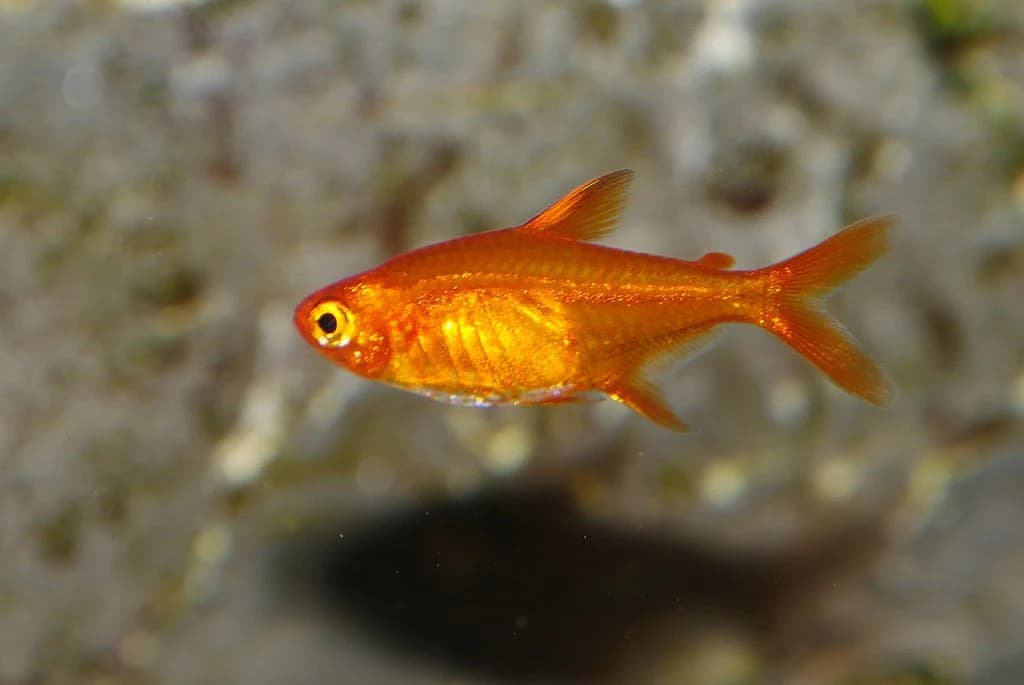
Hyphessobrycon amandae is a miniature freshwater fish from the Characidae family, native to the Araguaia River basin in central Brazil. The species was described in 1987 and named after Amanda Bleher, mother of the renowned ichthyologist Heiko Bleher. The Ember Tetra is rightfully considered one of the smallest tetras in the aquarium hobby — adults reach only 3-4 cm in length. Despite their modest size, these fish captivate with their intense fiery-orange coloration, which becomes especially vivid in a well-maintained aquarium with dark substrate and dense vegetation. A school of these tiny fish swimming through a lush planted tank creates a truly mesmerizing spectacle.
Tank Requirements
Thanks to their miniature size, Hyphessobrycon amandae is perfectly suited for nano aquariums. The minimum recommended volume is 40 liters for a school of 8-10 individuals. Optimal water parameters are: temperature 24-28°C, pH 6.0-7.5, and hardness GH 5-15. The aquarium should be densely planted with live plants such as Java moss, Cryptocorynes, and various Anubias species. Subdued lighting and dark substrate will enhance the fish's vibrant coloration. Water flow should be gentle to moderate, as in the wild these tetras inhabit calm backwaters. Floating plants on the surface will provide additional shade and help the fish feel secure. Filtration is essential, but a strong current is undesirable — a small sponge filter is an optimal choice.
Feeding and Diet
Hyphessobrycon amandae is an omnivorous fish with a very small mouth, which should be taken into account when selecting food. The staple diet can consist of high-quality micro pellets and finely crushed flakes. To maintain health and vibrant coloration, it is recommended to regularly supplement the diet with live or frozen foods: baby brine shrimp, daphnia, cyclops, and micro worms. Feed 2-3 times daily in small portions that the fish can consume within 2-3 minutes. A varied diet with a good proportion of protein-rich foods will ensure saturated color and active behavior.
Care and Maintenance
The Ember Tetra is an undemanding fish with a care level of 2 out of 5, making it suitable even for beginning aquarists. The foundation of care is maintaining stable water parameters and performing regular water changes of 20-25% weekly. It is important to monitor ammonia and nitrite levels, which should remain at zero. The average lifespan is 2-3 years with proper care. Hyphessobrycon amandae is a schooling fish and should be kept in groups of at least 8-10 individuals. In a larger school, the fish display more vivid coloration, feel more confident, and exhibit interesting social behavior. Solitary or small groups of individuals become pale and timid.
Compatibility
Hyphessobrycon amandae has an exceptionally peaceful temperament (1 out of 5 on the aggression scale), making it an ideal tankmate for other calm species of comparable size. Excellent companions include Chili Rasboras, Celestial Pearl Danios, Pygmy Corydoras, and Otocinclus. They also coexist well with peaceful shrimp. Avoid keeping them with large or active fish such as barbs, cichlids, and large tetras that may view the small Ember Tetras as prey or intimidate them. Due to their miniature size, tankmates should be chosen carefully, with preference given to nano fish species.
Breeding
Breeding Hyphessobrycon amandae in the home aquarium is possible, though it requires some experience (difficulty 3 out of 5). For spawning, prepare a separate tank of 10-20 liters with soft, slightly acidic water (pH 6.0-6.5) and a temperature of 26-28°C. Place fine-leaved plants or spawning mops on the bottom and keep the lighting dim. The female scatters a small number of eggs among the plants. After spawning, the parents should be removed immediately, as they are prone to eating their own eggs. The larvae hatch within 24-36 hours and begin free-swimming on day 3-4. Initial food should be infusoria and micro worms, followed by a transition to baby brine shrimp. The fry grow slowly and develop their adult coloration by 2-3 months of age.