Overview
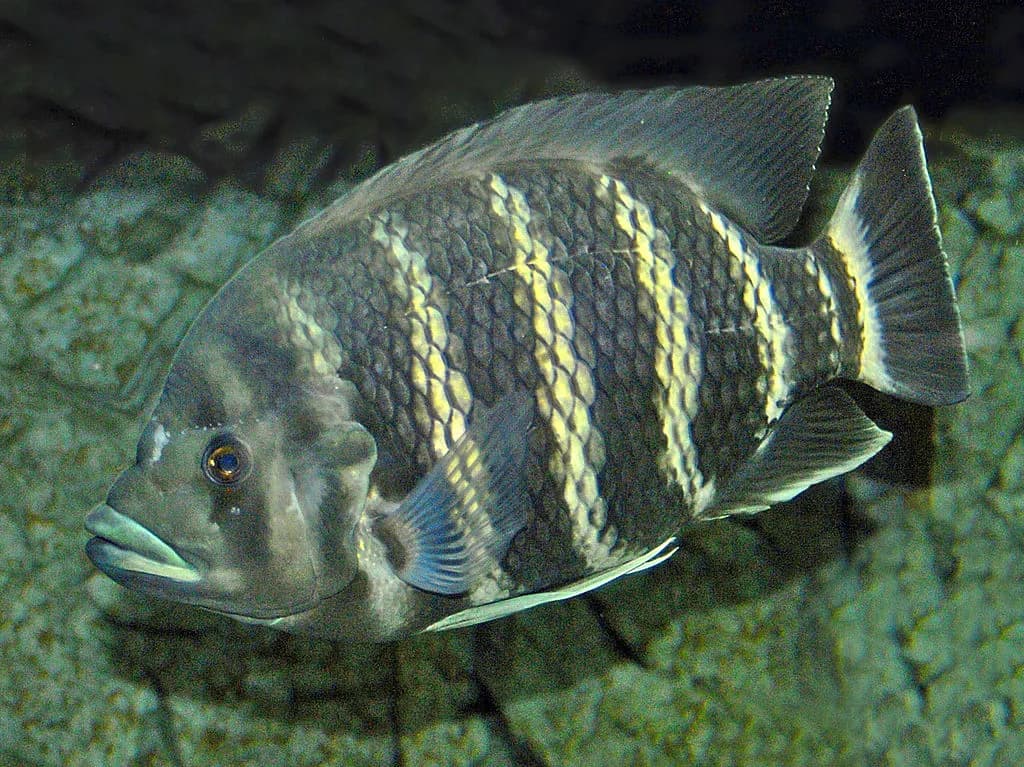
Heterotilapia buttikoferi, commonly known as the Zebra Tilapia or Buttikoferi Cichlid, is one of the most charismatic large cichlids in the aquarium hobby. This species originates from rivers and waterways of West Africa (Guinea, Liberia, Sierra Leone), where it inhabits both fast-flowing rivers and calm backwaters.
The defining feature of H. buttikoferi is its bold black-and-white striped pattern, which earned it the common name "Zebra Tilapia." Adults reach an impressive 30-35 cm and possess a powerful build typical of large cichlids. With age, the coloration may become less contrasted, taking on yellowish or olive tones.
The Zebra Tilapia has earned a reputation as one of the most intelligent aquarium fish. It quickly recognizes its owner, responds to human presence, and displays a distinct individual personality. These qualities make it a true "pet" rather than merely a decorative aquarium inhabitant. However, this high intelligence combined with strong territoriality makes keeping this species a genuine challenge.
Tank Requirements
An adult Zebra Tilapia requires an aquarium of at least 300 liters (80 gallons), while a pair needs 400-500 liters (105-130 gallons). The fish's large size and active behavior demand significant swimming space.
Optimal water parameters:
- Temperature: 22-28°C (72-82°F)
- pH: 6.5-7.5
- General Hardness (GH): 5-20
Filtration is a critical element of husbandry. A powerful canister filter rated at 5-6 times the tank volume per hour is recommended, as H. buttikoferi produces a substantial biological load. Weekly water changes of 25-30% are mandatory.
Coarse sand or fine gravel works best as substrate. Decorations should be heavy and stable: large rocks and massive driftwood. Zebra Tilapias are active "remodelers" of their aquarium, constantly digging through substrate and moving objects. Live plants rarely survive in a tank with H. buttikoferi — the fish uproot and eat them. If greenery is desired, tough-leaved species like Anubias attached to rocks may be attempted.
A secure tank lid is essential, as large specimens are capable of jumping out of the water.
Feeding and Diet
Heterotilapia buttikoferi is an omnivorous species with a predominantly herbivorous diet. In the wild, these fish feed on algae, aquatic plants, small invertebrates, and detritus.
In the aquarium, the staple diet should consist of:
- High-quality pellets for large cichlids (with high vegetable content)
- Fresh vegetables: blanched spinach, lettuce leaves, zucchini slices, cucumber, and green peas
- Spirulina and algae-based foods
As supplementary foods, offer:
- Frozen bloodworms, brine shrimp, and shrimp
- Earthworms
- White fish fillet (occasionally)
Feed 1-2 times daily in moderate portions. Zebra Tilapias are prone to overeating and obesity, so controlling food quantity is important. One fasting day per week benefits the fish.
Care and Maintenance
Keeping a Zebra Tilapia requires experience and a responsible approach. This is a strong, energetic fish with pronounced territoriality that intensifies with age.
Key care aspects:
- Water changes: 25-30% weekly, with thorough gravel vacuuming
- Parameter monitoring: regular testing of pH, ammonia, nitrites, and nitrates
- Filter maintenance: rinsing filter media in tank water every 2-3 weeks
- Behavioral observation: monitoring aggression levels is crucial, especially if tank mates are present
H. buttikoferi may direct aggression not only at other fish but also at aquarium equipment — heaters, thermometers, and filter tubes. All devices should be securely mounted or external models should be used. Some keepers note that these fish may "bite" hands during tank maintenance, so caution is advised.
With proper care, the Zebra Tilapia can live 10-15 years.
Compatibility
The Zebra Tilapia is one of the most aggressive aquarium fish, making compatibility a particularly serious concern. Many experienced aquarists prefer keeping H. buttikoferi in a species-only tank — either alone or as a pair.
If a community tank is planned, tank mates must be:
- Large (comparable or greater in size)
- Able to hold their own
- Occupying different zones of the aquarium
Potentially compatible species include large Parachromis managuensis, Oscars, Pterygoplichthys, and large Synodontis catfish. However, even with these species, conflicts are possible, and much depends on the individual temperament of the specific fish.
Absolutely unsuitable tank mates include: small fish, peaceful cichlids, slow-moving species, and any fish that cannot withstand the Zebra Tilapia's assertive behavior.
Breeding
Breeding Heterotilapia buttikoferi in captivity is a task for experienced aquarists. The primary challenge lies in pair formation: the fish are extremely selective in choosing a partner, and an incompatible pairing can result in the death of one individual.
It is recommended to raise a group of 5-6 juveniles, allowing a pair to form naturally. Once a pair has established, the remaining fish should be removed.
To stimulate spawning:
- Raise the temperature to 26-28°C (79-82°F)
- Ensure stable water parameters
- Provide flat rocks or ceramic tiles as spawning substrate
H. buttikoferi are substrate spawners. The female deposits several hundred eggs on the prepared surface, after which both parents fiercely guard the clutch. During the spawning period, the pair's aggression reaches its peak, and any tank mates face serious danger.
Incubation lasts approximately 3-4 days at 27°C (81°F). Fry become free-swimming about one week after hatching. First foods include baby brine shrimp, microworms, and finely crushed dry food. The parents attentively guard their offspring for several weeks, which is one of the most impressive spectacles in the aquarium hobby.