Overview
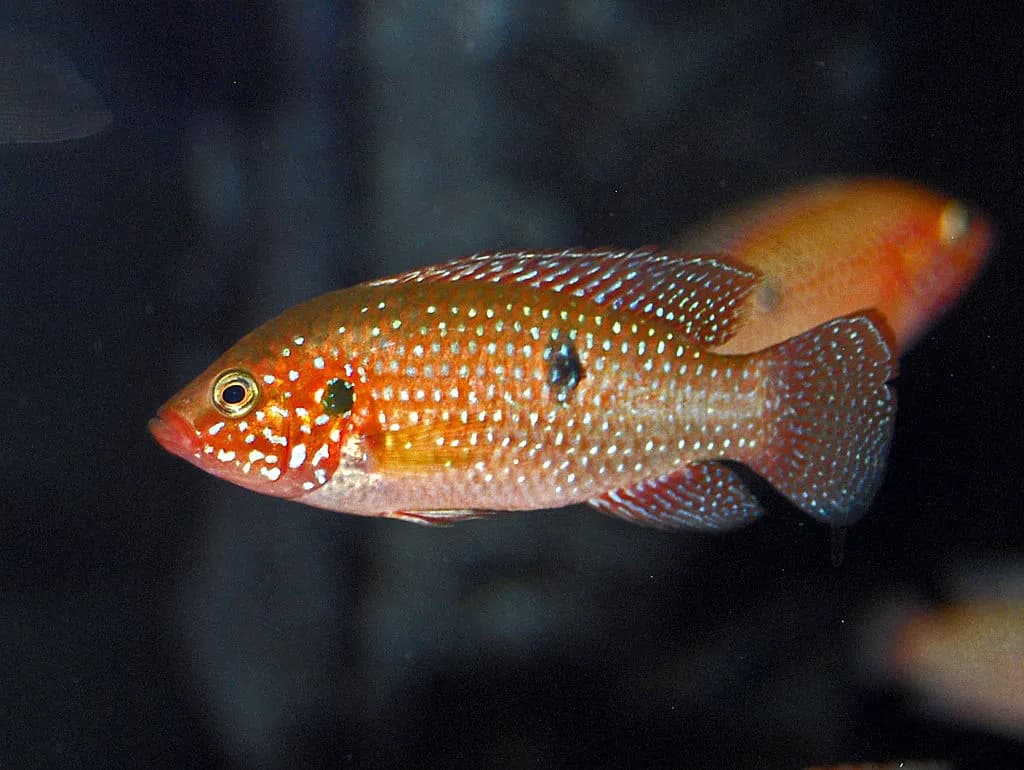
Hemichromis lifalili is one of the most visually striking African cichlids, belonging to the family Cichlidae. In the wild, this species inhabits slow-moving rivers and lakes of Central Africa, primarily in the Democratic Republic of the Congo. Adults reach a size of 8-10 cm, making them relatively compact representatives of the Hemichromis genus.
The defining feature of Hemichromis lifalili is its magnificent bright red body coloration, adorned with shimmering bluish spots. During spawning, the intensity of the red color increases dramatically, turning the fish into a true aquarium showpiece. Unlike the closely related jewel cichlid, Hemichromis lifalili has a calmer disposition, making it a preferable choice for community tanks. With proper care, their lifespan ranges from 5 to 8 years.
Tank Requirements
Keeping Hemichromis lifalili requires an aquarium of at least 100 liters. For a pair with adequate hiding spots and territory zoning, a larger tank is recommended. Optimal water parameters are: temperature 23-28°C, pH 6.0-7.5, and hardness GH 8-15.
Fine gravel or sand works well as substrate, as these fish enjoy digging, especially when preparing for spawning. The tank should be generously decorated with rocks, driftwood, and caves to create natural shelters and visual barriers. This helps reduce territorial conflicts. Plants should be hardy and well-rooted species (such as Anubias and Cryptocoryne), as soft-leaved varieties may be damaged.
A secure lid is essential — Hemichromis lifalili can jump out of the water, particularly when stressed. Filtration should be efficient with moderate flow, mimicking their natural habitat conditions.
Feeding and Diet
Hemichromis lifalili is an omnivorous species with pronounced predatory tendencies. In the wild, their diet primarily consists of small invertebrates, insect larvae, and algae. In the aquarium, they readily accept a wide variety of foods.
High-quality cichlid pellets or flakes can serve as the dietary staple. To maintain vibrant coloration and good health, the diet should be regularly supplemented with live or frozen foods: bloodworms, brine shrimp, daphnia, and glassworms. A vegetable component is also important — spirulina-based foods or blanched spinach leaves can be offered.
Feeding 1-2 times daily in small portions that the fish consume within 2-3 minutes is recommended. Dietary variety is the key to rich coloration and a strong immune system.
Care and Maintenance
Hemichromis lifalili has a moderate care difficulty (3 out of 5) and is well suited for aquarists with some experience. The most important requirement is stability of water parameters and overall tank cleanliness.
Weekly water changes of 20-30% are essential for keeping nitrate levels low. Regular substrate vacuuming is necessary to remove food remnants and waste products. Monitor water parameters with test kits at least once a week, especially during the first months after setting up the aquarium.
Despite being reasonably hardy, these cichlids are sensitive to sudden fluctuations in water parameters and elevated levels of ammonia and nitrites. Good biological filtration and regular filter maintenance are vital for the fish's health. Lighting can be moderate; under bright light, the fish tend to feel less comfortable and may become skittish.
Compatibility
On the aggression scale, Hemichromis lifalili rates 3 out of 5 — a moderately territorial cichlid that is significantly more peaceful than many related species, including the jewel cichlid. However, aggression noticeably increases during the breeding period.
Suitable tankmates include fish of comparable size and temperament: medium-sized African cichlids, large barbs, large tetras, Synodontis catfish, and other hardy bottom-dwellers. They should not be kept with small peaceful species (such as neon tetras or guppies), which may become targets of aggression or be eaten.
When keeping multiple individuals, it is important to provide sufficient hiding spots and visual barriers so that each fish can establish its own territory. If a breeding pair forms in the tank, other fish should be removed, as the parents will fiercely defend their eggs and fry.
Breeding
Breeding Hemichromis lifalili is not particularly difficult (2 out of 5) and is achievable even for novice aquarists. They are substrate spawners that form stable pairs.
To stimulate spawning, raise the water temperature to 26-28°C and provide flat rocks or ceramic tiles in the tank to serve as egg-laying surfaces. The bonded pair will thoroughly clean the chosen surface, after which the female deposits up to 300-500 eggs that the male fertilizes.
Both parents actively tend to the clutch: fanning the eggs with their fins, removing unfertilized eggs, and aggressively chasing away any fish that approach the nest. During this period, the parents' coloration becomes especially intense. The fry become free-swimming after approximately 5-7 days and initially stay in a tight school under parental supervision.
Newly hatched brine shrimp or finely crushed flakes serve as first food for the fry. Parental care continues for several weeks, which significantly improves offspring survival rates.