Overview
Gymnocorymbus ternetzi, commonly known as the Black Skirt Tetra, Black Widow Tetra, or Petticoat Tetra, is one of the most popular and recognizable freshwater fish in the Characidae family. In the wild, this species inhabits the Paraguay and Guapore River basins in South America, where it dwells in slow-moving tributaries and flooded areas with dense vegetation.
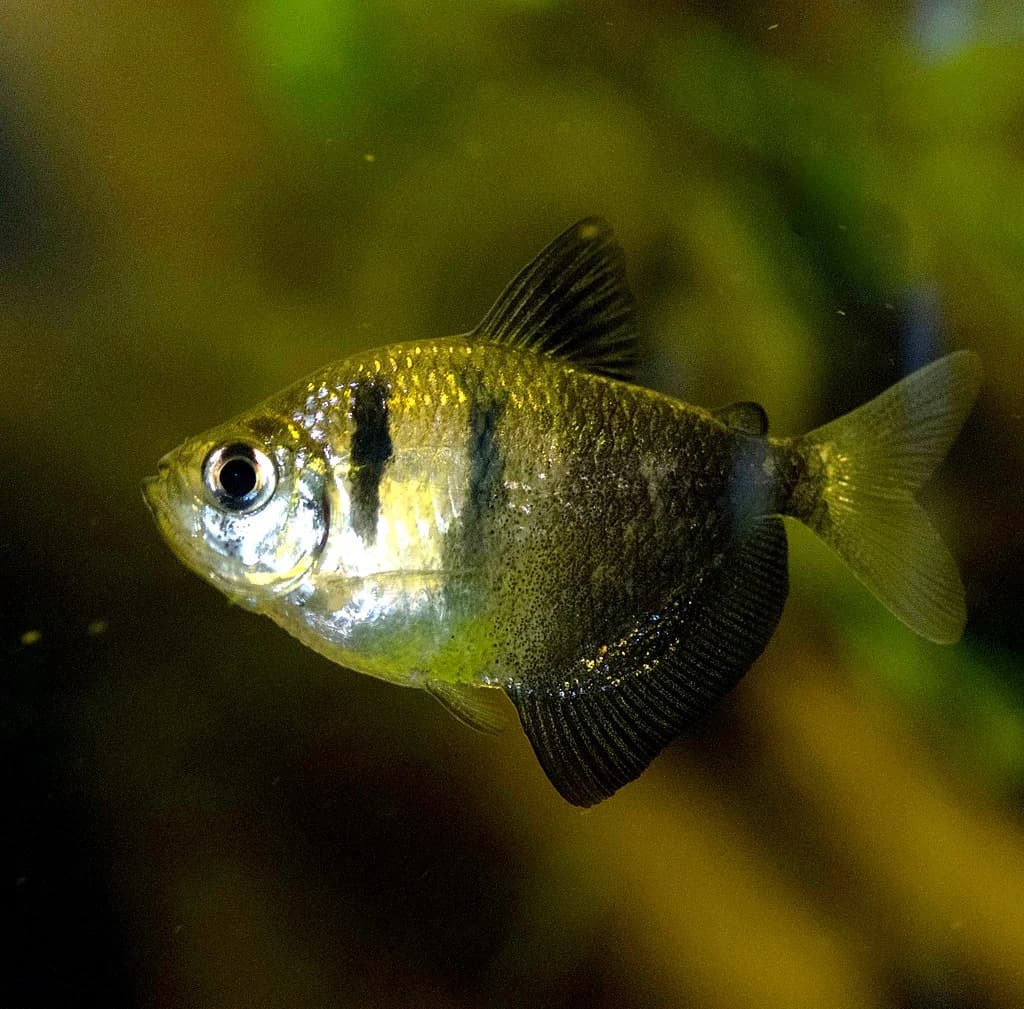
The Black Skirt Tetra has a distinctive tall, laterally compressed body featuring two prominent vertical black bars on the front half. The rear portion of the body is adorned with a large, flowing black anal fin that resembles a skirt — hence the common names "Black Skirt" and "Petticoat Tetra." Adults reach a size of 5–7 cm and can live for 3–5 years in aquarium conditions with proper care.
A notable characteristic of this species is the age-related color change. Juveniles display a deep, striking black coloration that gradually fades with age, transitioning to a silvery-grey tone. This is a completely natural process and not a sign of illness or stress.
Today, numerous selectively bred color morphs are available: albino varieties, long-finned (veil-tail) forms, and vibrant fluorescent versions marketed as GloFish. Despite their visual differences, all these morphs require the same care and water parameters.
Tank Requirements
A group of 6–8 Black Skirt Tetras requires a tank with a minimum volume of 80 liters. This species actively swims in the middle water column, so providing ample open swimming space is essential.
Optimal water parameters:
- Temperature: 22–28 °C
- pH: 6.0–7.5
- General Hardness (GH): 5–20 dGH
A fine, dark-colored gravel or sand substrate works best — the dark background enhances the fish's coloration. Plant the aquarium densely along the perimeter and back wall, leaving the central area open for swimming. Vallisneria, cryptocorynes, and anubias are excellent choices. Floating plants will help create the subdued lighting that Black Skirt Tetras prefer.
Filtration should provide a moderate flow — overly strong currents will stress the fish. Aeration is essential, and the tank must have a secure lid, as Black Skirt Tetras are capable jumpers.
Feeding and Diet
Gymnocorymbus ternetzi is an omnivorous species with no special dietary requirements. In the wild, they feed on small insects, larvae, worms, and plant matter.
In the aquarium, high-quality dry foods — flakes or small granules formulated for tropical fish — can serve as the dietary staple. To ensure balanced nutrition and maintain vibrant coloration, supplement the diet regularly with:
- Live and frozen foods: bloodworms, brine shrimp, daphnia, tubifex
- Plant-based supplements: blanched spinach leaves, spirulina
Feed 1–2 times daily in small portions that the fish consume within 2–3 minutes. Overfeeding is one of the most common mistakes, leading to obesity and deteriorating water quality. A weekly fasting day is beneficial for the fish's health.
Care and Maintenance
The Black Skirt Tetra is one of the most undemanding species in the hobby, making it an ideal choice for beginners. Its care level is rated as easy, though basic husbandry principles must still be followed.
Weekly water changes of 20–25% will help maintain stable parameters and prevent nitrate accumulation. Test water parameters regularly: ammonia and nitrites should always read zero.
The Black Skirt Tetra is a schooling fish and must be kept in groups of at least 6 individuals. When kept alone or in small numbers, they become timid and may exhibit fin-nipping behavior toward tankmates. In a properly sized school, these fish display fascinating social dynamics and are considerably more confident and active.
Pay attention to lighting: Black Skirt Tetras prefer moderate to subdued light. Bright illumination without shading can cause stress and color fading.
Compatibility
Gymnocorymbus ternetzi is a peaceful species well-suited for community aquariums. Ideal tankmates include similarly sized fish with comparable temperaments:
- Other tetras: neon tetras, cardinal tetras, black neon tetras, flame tetras, Congo tetras
- Rasboras: chili rasboras, scissortail rasboras
- Bottom dwellers: panda corydoras, Sterba's corydoras, bristlenose plecos
- Small cichlids: German blue rams, Bolivian rams
Avoid keeping them with large, aggressive species. Also be cautious with fish that have long, flowing fins — Black Skirt Tetras are occasionally prone to nipping. Very small fish and shrimp may also be harassed or treated as prey.
Breeding
Breeding Gymnocorymbus ternetzi is straightforward and accessible even for novice aquarists. Fish reach sexual maturity at 6–8 months of age. Females can be identified by their rounder bellies and larger overall size, while males are slimmer with a more pointed dorsal fin.
Prepare a separate breeding tank of 20–30 liters with fine-leaved plants (Java moss, cabomba) or a spawning grid on the bottom to protect the eggs from being consumed by the parents. Water parameters in the breeding tank should be: temperature 26–28 °C, pH 6.5–7.0, soft water (GH 5–10). Lighting should be dim.
One week before spawning, separate the breeders and feed them generously with live foods. Then place a pair or small group (1 female and 2 males) into the breeding tank in the evening. Spawning typically occurs the following morning. The female scatters 300–500 adhesive eggs among the plants.
Remove the parents immediately after spawning, as they will readily consume their own eggs. Larvae hatch within 24–36 hours, and the fry become free-swimming after 3–5 days. Infusoria and freshly hatched brine shrimp nauplii serve as excellent first foods. Gradually transition the fry to larger foods as they grow.