Overview
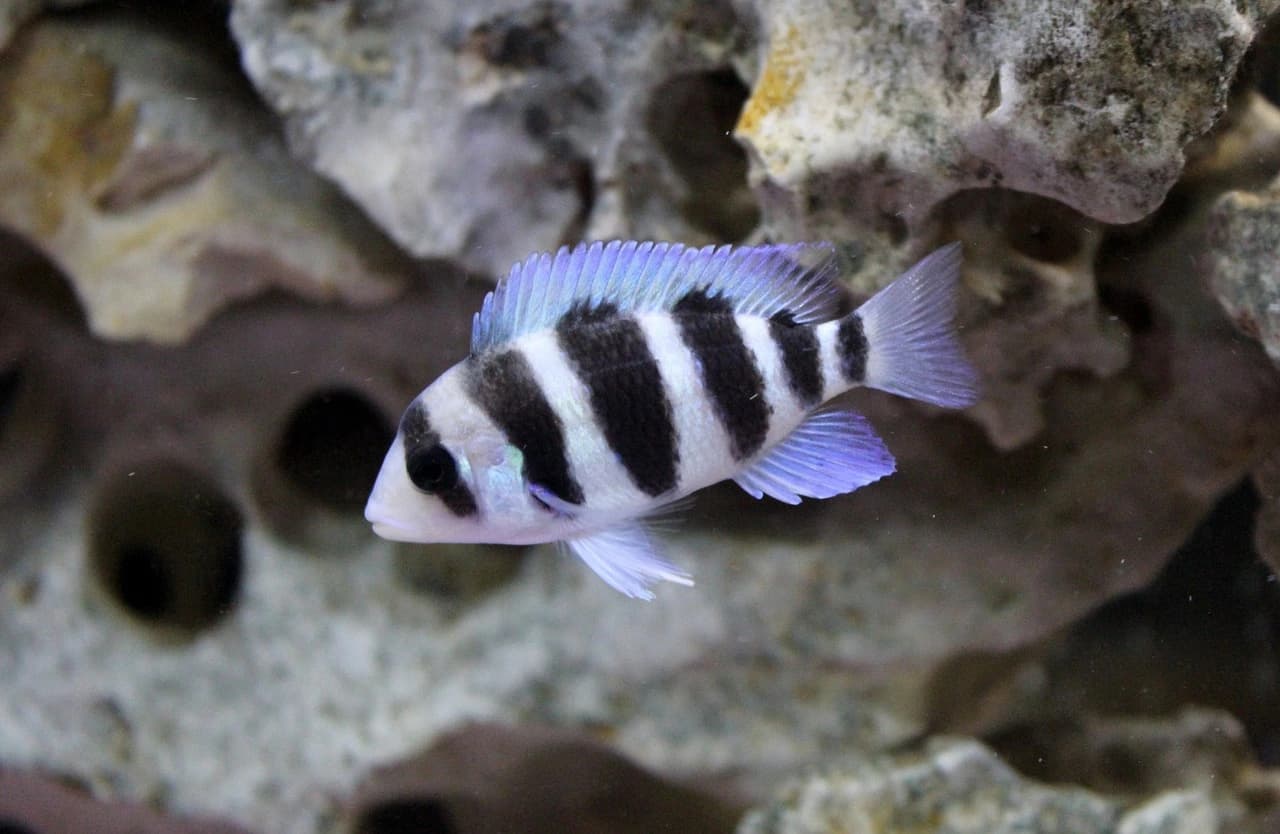
Cyphotilapia frontosa is one of the most recognizable and majestic cichlids of Lake Tanganyika in East Africa. In the wild, this fish inhabits remarkable depths of 30 to 70 meters, making it unique among aquarium cichlids. The Frontosa grows to 30–35 cm and features a powerful build, a large head, and six to seven wide dark vertical bars on a light background.
The defining characteristic of the species is the massive fatty hump (frontal protuberance) on the forehead, which develops with age and is especially pronounced in males. It is this hump that earned the fish its name and the nickname "Queen of Tanganyika."
Several geographic variants of Cyphotilapia frontosa exist, differing in coloration: Burundi (vivid blue tones), Zaire (more blue-tinted with wide bars), Kigoma (six bars with a bluish sheen), and Mpimbwe (intense blue color on the head and fins). Each variant is prized by collectors and has its own dedicated following.
The Frontosa is a slow-growing fish with an impressive lifespan of 15–20 years, making it a true long-liver among aquarium inhabitants. In the wild, it behaves as a nocturnal hunter: rising from the depths at nightfall to prey on small fish sleeping in the shallows.
Tank Requirements
Keeping Cyphotilapia frontosa requires an aquarium of at least 300 liters. Given the fish's large size and preference for deepwater conditions, a tall tank is recommended. Optimal water parameters are: temperature 24–28°C, general hardness (GH) 10–20, and pH 7.5–9.0. These parameters reflect the conditions of Lake Tanganyika — alkaline and hard water.
Fine sand works best as a substrate, mimicking the lake bottom. The decor should include large rocks and stone structures with caves and shelters — Frontosas love hiding among rocks. At the same time, it is important to leave sufficient open swimming space. Driftwood is not typical for the Tanganyika biotope and is best avoided.
Filtration must be powerful, as large fish produce a significant amount of waste. An external canister filter is the optimal choice. Water flow should be kept moderate. Subdued lighting is preferred, matching the deepwater lifestyle of this species.
Feeding and Diet
In nature, Cyphotilapia frontosa is a predator that feeds primarily on small fish and crustaceans. In the aquarium, the diet should be based on high-quality granulated food for large cichlids, supplemented with frozen foods: shrimp meat, mussels, fish pieces, and krill.
An important trait of the Frontosa is that it is a slow feeder. The fish takes its time picking up food, so it should not be kept with fast and greedy tankmates that will snatch food away. Feeding 1–2 times per day in small portions is recommended. Overfeeding is dangerous — it can lead to obesity and digestive problems.
Live food (feeder fish) can be offered as an occasional treat but should not form the basis of the diet due to the risk of introducing infections. Vegetable supplements, such as spirulina-based foods, are beneficial for overall health. A varied diet is the key to vibrant coloration and longevity in Frontosas.
Care and Maintenance
Cyphotilapia frontosa is a hardy fish provided that water parameters remain stable. Weekly water changes of 20–25% are essential for maintaining water quality. Special attention should be paid to controlling nitrate levels — for Tanganyika cichlids, these should remain minimal.
The Frontosa grows very slowly, and reaching full size with a well-developed frontal hump can take several years. This is a fish for the patient aquarist. There is no need to rush — with proper care, a Frontosa will bring joy to its owner for 15–20 years.
The optimal keeping arrangement is a harem group: one male with 3–5 females. This reduces intraspecific aggression and creates a more natural social structure. Males are larger than females, have a more prominent frontal hump, and elongated fins.
The species is susceptible to diseases common among cichlids — ich and bacterial infections, especially under stress or unstable conditions. Prevention is the best cure: maintain stable water parameters and avoid overstocking the tank.
Compatibility
Cyphotilapia frontosa is remarkably peaceful for its size. It coexists well with other calm cichlids from Lake Tanganyika. Excellent tankmates include Brichardi cichlids, Neolamprologus leleupi, Lamprologus ocellatus, and Tropheus duboisi.
Avoid keeping Frontosas with aggressive species, as well as with small fish — the latter may be perceived as prey. It is also not recommended to house them with fast and active fish that will stress the slow-moving Frontosa and intercept its food.
Keeping them in a species-only tank as a group of 5–6 individuals is one of the best options. In such a group, their natural behavior unfolds, making them especially fascinating to observe.
Breeding
Breeding Cyphotilapia frontosa in an aquarium is entirely achievable but requires patience. Sexual maturity is reached late — at 3–4 years of age. The female carries the eggs in her mouth (maternal mouthbrooding) for 4–6 weeks, which is one of the longest incubation periods among mouthbrooding cichlids.
To stimulate spawning, maintain a water temperature of 26–28°C and provide flat rocks or caves, which males use as spawning sites. Clutch size is typically small — 20 to 50 large eggs.
During incubation, the female barely eats, and after releasing the fry, she needs time to recover. The fry are large and can immediately accept brine shrimp nauplii and finely ground food. Like the adults, the fry grow slowly.
Harem keeping (1 male to 3–5 females) significantly increases the chances of successful breeding. It is important not to disturb the female during brooding — stress can cause her to swallow or spit out the eggs prematurely.