Overview
Corydoras adolfoi is a small armored catfish from the family Callichthyidae, native to the upper reaches of the Rio Negro in Brazil. In the wild, this species inhabits shaded areas with soft, slightly acidic water typical of blackwater biotopes. Adults reach a size of 6-7 cm, making them well-suited inhabitants for medium-sized aquariums.
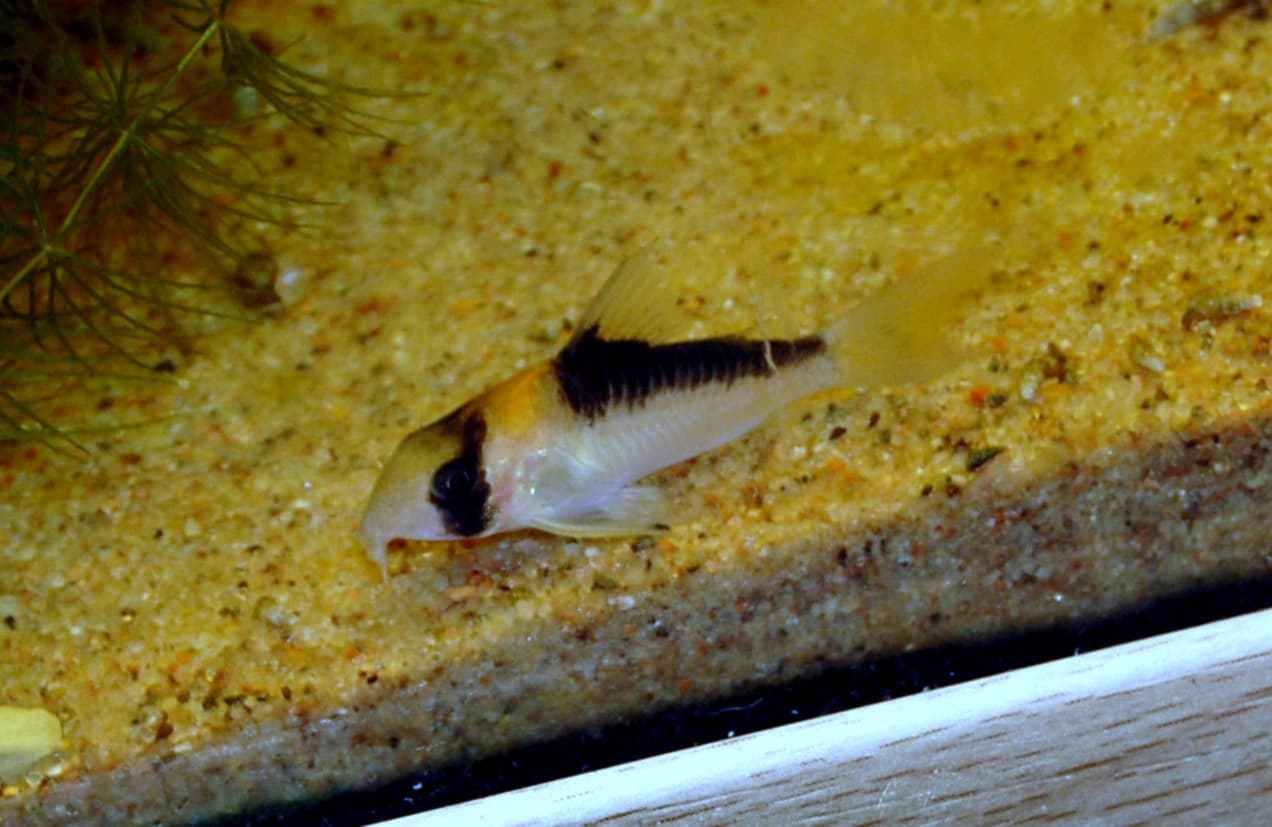
The most distinctive feature of Corydoras adolfoi is a bright orange band on the head running between the eyes and the dorsal fin, combined with a wide black stripe extending from the nape along the back. The body is light, almost white, with transparent fins. This species is often confused with Corydoras duplicareus, which has a broader and more intense orange band. It is worth paying attention to these differences when purchasing.
Adolfo's Cory is a shoaling fish with a very peaceful temperament. Watching a group of these catfish bustling along the bottom in search of food is one of the joys of fishkeeping.
Tank Requirements
A group of Corydoras adolfoi requires an aquarium of at least 60 liters. The optimal water temperature is 24-28°C, pH should be 6.0-7.5, and general hardness (GH) between 5-15. In nature, these catfish inhabit soft water, so for the best health, it is recommended to keep parameters closer to the lower end of the hardness range.
Substrate is one of the key considerations when keeping any corydoras species. Use fine sand or smooth small gravel to avoid damaging the fish's sensitive barbels. Sharp substrate can cause infections and barbel erosion, reducing the catfish's ability to find food.
To create a biotope close to their natural habitat, add driftwood, fallen oak or Indian almond leaves, and subdued lighting. Such blackwater conditions not only look impressive but also have a positive effect on the fish's health. Live plants such as Anubias and Cryptocoryne complement the setup well and create shaded areas. Filtration should keep the water clean but without strong current — corydoras prefer calm areas.
Feeding and Diet
Corydoras adolfoi is an omnivorous species that feeds on small invertebrates, insect larvae, and detritus in the wild. In the aquarium, the staple diet should consist of high-quality sinking granules and tablets designed for bottom dwellers. Supplement this with live or frozen foods: bloodworms, brine shrimp, daphnia, and tubifex.
Feed the fish 1-2 times daily in small portions. An important note: corydoras are more active feeders at dusk, so evening feeding after the main lights are turned off is often more effective. Make sure the food reaches the bottom and is not intercepted by other tank inhabitants on the way down.
A varied and balanced diet helps maintain vibrant coloration and strengthens the fish's immune system.
Care and Maintenance
Adolfo's Cory is a relatively undemanding species, but successful keeping requires following several guidelines. Weekly water changes of 20-30% will help maintain stable water quality. Use a gravel vacuum to clean the bottom, but do so carefully to avoid disturbing the fish.
Regularly test water parameters, paying special attention to nitrate and ammonia levels — corydoras are sensitive to elevated concentrations of these compounds. Temperature should be kept stable, avoiding sudden fluctuations.
Pay attention to the condition of the fish's barbels — shortening or reddening may indicate problems with substrate or water quality. Healthy corydoras actively swim along the bottom, periodically rising to the surface for a gulp of air — this is normal behavior related to intestinal breathing. However, excessively frequent trips to the surface may indicate insufficient oxygen in the water.
With a lifespan of 5-10 years, Corydoras adolfoi will be a long-term companion with proper care.
Compatibility
Corydoras adolfoi is an exceptionally peaceful species that is perfectly suited for community aquariums. These catfish should be kept in a group of at least 6 individuals — in a shoal, they feel more confident, behave more actively, and display brighter coloration.
Ideal tankmates are small peaceful fish that prefer similar water parameters. Excellent choices include neon tetras, cardinal tetras, small rasboras, as well as other corydoras species such as panda cory or Sterba's cory.
Avoid keeping them with large or aggressive species, as well as fish prone to fin nipping. Large cichlids and active barbs are not the best companions. It is also undesirable to add other bottom-dwelling fish that may compete for territory and food.
Breeding
Breeding Corydoras adolfoi in the aquarium is possible, though it requires some preparation. To stimulate spawning, use the rain season simulation method: perform a large water change (50-70%) with cooler water 2-3°C below the usual temperature. Simultaneously increase aeration and, if possible, slightly lower the atmospheric pressure.
Prepare a separate breeding tank with fine-leaved plants or spawning mops. The optimal ratio is 2-3 males per female. The female lays sticky eggs in small batches, attaching them to glass, plants, and other surfaces. After spawning, the adults must be removed, as they may eat the eggs.
Eggs develop at a temperature of 26-28°C and hatch in 4-5 days. To prevent fungal infections, it is recommended to add methylene blue or alder cones to the water. Fry should initially be fed infusoria and microworms, gradually transitioning to brine shrimp nauplii and finely crushed sinking foods.