Overview
Botia striata is a small freshwater fish from the family Botiidae, known to aquarists as the Zebra Loach or Candystripe Loach. In nature, this species inhabits clean, well-oxygenated rivers and streams of southern India, particularly in the river basins of the Karnataka and Maharashtra states. The species was described by Narayan Rao back in 1920, but gained widespread popularity in the aquarium hobby much later.
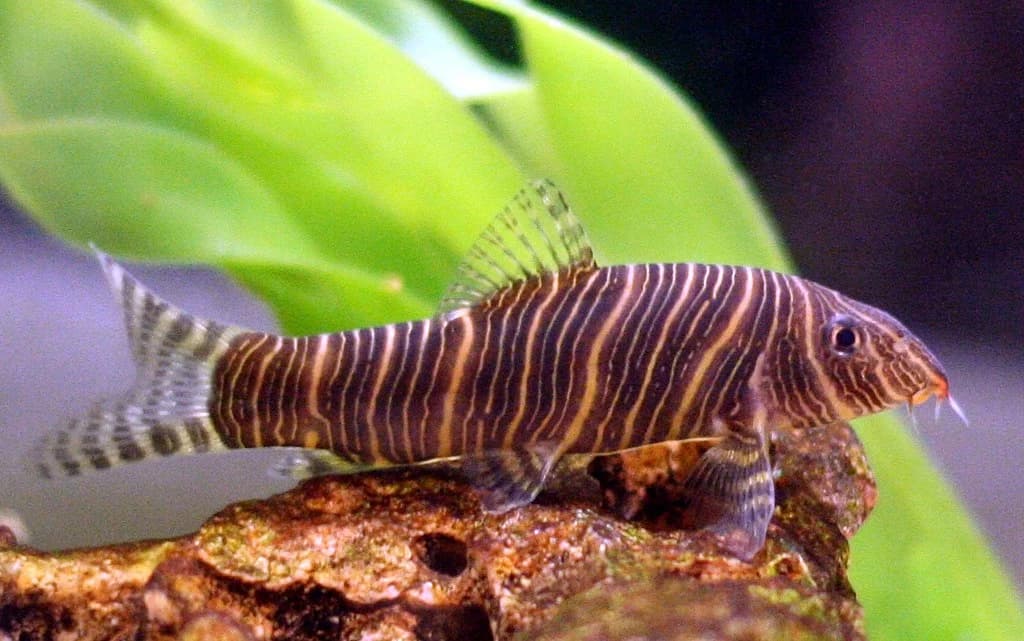
The distinguishing feature of Botia striata is a vivid pattern of alternating light and dark vertical stripes on its elongated body, reminiscent of a zebra's markings. The body is laterally compressed, with a subterminal mouth equipped with several pairs of sensitive barbels that the fish uses to search for food in the substrate. Adults reach a size of 6–8 cm, making them one of the most compact representatives of the genus Botia.
In terms of temperament, this is one of the most peaceful loaches available. Unlike many related species such as the Blue Botia or Clown Loach, the Zebra Loach very rarely shows aggression toward tank mates. It is a schooling fish, and in a group of 5–6 or more individuals, you can observe fascinating social behavior: from hierarchical games to the amusing habit of lying on their sides to sleep, which often alarms beginner fishkeepers.
Tank Requirements
A group of 5–6 Zebra Loaches requires an aquarium with a minimum volume of 100 liters. Optimal water parameters are: temperature 24–28 °C, pH 6.0–7.5, and general hardness (GH) 5–12. The water should be clean and well-oxygenated — an external canister filter with moderate flow is recommended.
Fine sand or rounded gravel without sharp edges works best as substrate. Sharp rocks and coarse gravel can damage the fish's sensitive barbels, leading to infections. The aquarium should be decorated with plenty of hiding spots: driftwood, ceramic tubes, rock formations, and dense vegetation will create a comfortable environment close to their natural biotope. Zebra Loaches are primarily diurnal fish, but with sufficient hiding places they feel more confident and venture into open areas more frequently.
Moderate or subdued lighting is preferred. Live plants such as Anubias, Cryptocoryne, and Java Moss complement the setup beautifully and help maintain water quality.
Feeding and Diet
Botia striata is an omnivorous species with a strong preference for animal-based foods. In nature, the fish feed on small invertebrates, insect larvae, worms, and algae. In the aquarium, the diet should be based on high-quality sinking granules or tablets designed for bottom-dwelling fish.
Be sure to include live or frozen foods in the menu: bloodworms, brine shrimp, daphnia, and tubifex. Vegetable supplements are also important — blanched pieces of zucchini, spinach, or cucumber will be eagerly accepted. Zebra Loaches are known as natural snail controllers: they readily consume small ramshorn and Malaysian trumpet snails, which can be useful for managing mollusk populations in the aquarium.
Feeding 1–2 times daily in small portions is recommended, ensuring that food has time to sink to the bottom. Evening feeding is particularly effective, as loach activity increases during twilight hours.
Care and Maintenance
The Zebra Loach is an undemanding species, but stability of water parameters is of key importance. Weekly water changes of 25–30% will help maintain low nitrate levels and overall water cleanliness. Always use a water conditioner to remove chlorine during water changes.
Regularly test water parameters: ammonia and nitrites should be at zero, and nitrates should not exceed 20–30 mg/l. The filter should be rinsed in aquarium water every 2–4 weeks to prevent clogging.
Botia striata must be kept in a group of at least 5–6 individuals. When kept alone or in pairs, the fish experience chronic stress, become skittish, and may display uncharacteristic aggression. In a properly formed school, a hierarchy is established and the fish display the full spectrum of their natural behavior.
Like other loaches, Botia striata is sensitive to medications containing copper and formalin. When treating diseases, use half doses and carefully monitor the fish's response. Loaches are prone to Ich (white spot disease), especially during sudden temperature fluctuations, so minimize temperature swings during water changes.
Compatibility
The Zebra Loach is one of the best loaches for a community aquarium. Its peaceful nature allows it to be kept with a wide range of fish of similar size and temperament. Excellent tank mates include small to medium-sized characins (tetras, rasboras), peaceful barbs, Botia dario, Botia kubotai, Dwarf Chain Loach, as well as peaceful catfish such as Ancistrus and Corydoras.
It is not recommended to keep Zebra Loaches with large aggressive cichlids that may bully or prey on them. Also avoid housing them with very slow-moving fish with long fins (such as fancy-finned varieties), as loaches may occasionally nip at fins.
Zebra Loaches treat shrimp and small snails as food items, so cohabitation with ornamental crustaceans and mollusks is not advisable.
Breeding
Breeding Botia striata in home aquariums is extremely challenging, and successful spawning cases are rare. On a commercial scale, breeding is carried out on farms in Southeast Asia using hormonal stimulation.
Sexual dimorphism is minimal: females are usually slightly larger and fuller than males, especially when carrying eggs. To stimulate spawning at home, a separate tank of at least 80 liters with soft water (GH 3–6), a temperature of 26–28 °C, and plenty of fine-leaved plants or synthetic spawning mops as substrate is recommended. Simulating the rainy season — a gradual decrease in temperature followed by an increase along with larger water changes — may trigger spawning behavior.
The female scatters eggs among the plants, after which the parents must be removed immediately. Incubation lasts approximately 18–24 hours. The fry are very small and feed on infusoria for the first few days before transitioning to brine shrimp nauplii. Fry survival rates are typically low even with meticulous care, so breeding this species remains the domain of experienced breeders.