Overview
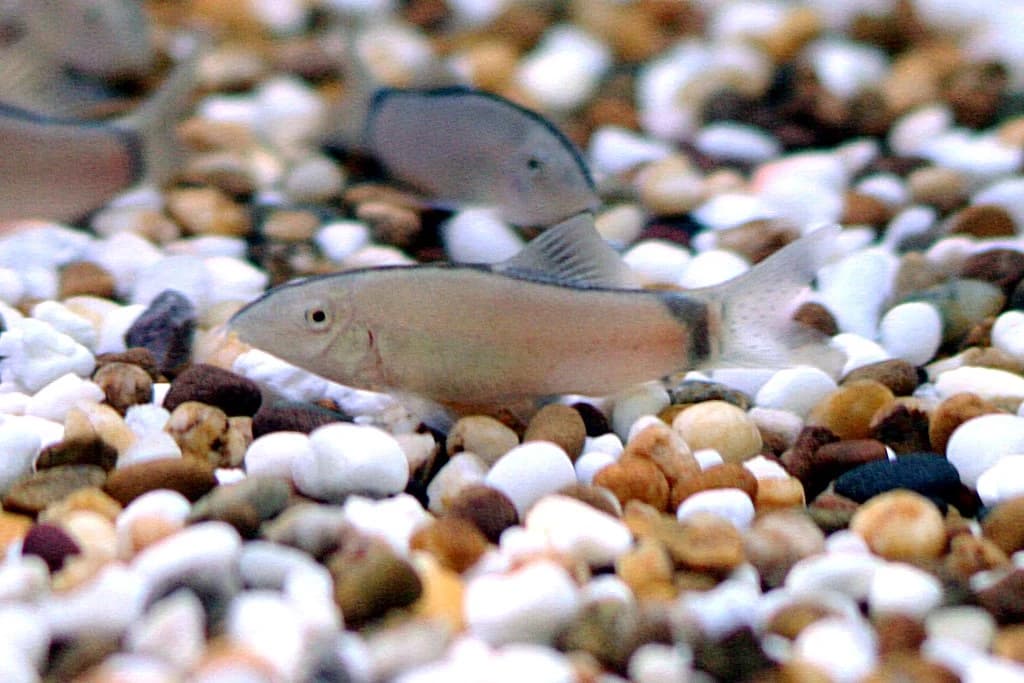
The Skunk Loach (Botia morleti), also known as Hora's Loach or Cream Loach, is a freshwater fish belonging to the Botiidae family. It is native to rivers and streams across Southeast Asia, primarily found in Thailand, Laos, Cambodia, and Vietnam. In the wild, this species inhabits flowing waters with sandy or silty substrates, rich in hiding spots formed by driftwood, rocks, and leaf litter.
The most distinctive feature of Botia morleti is the broad dark stripe running from the head along the entire body to the base of the tail, resembling the pattern of a skunk — hence the common name. The base body color ranges from cream to yellowish. Like other members of the family, it has a retractable subocular spine beneath each eye used for defense — something to keep in mind when netting, as the spine can easily become entangled in mesh.
Adults reach 15–20 cm in length, making this a medium-sized loach. With proper care, Botia morleti lives 8–12 years. The fish is primarily diurnal, though it shows peak activity during dawn and dusk hours.
Tank Requirements
A group of Skunk Loaches requires an aquarium of at least 100 liters. Optimal water parameters are: temperature 24–28 °C, pH 6.5–7.5, and general hardness GH 8–15. This fish is sensitive to nitrate buildup, so effective biological filtration and regular water changes are essential.
Fine substrate is preferred — sand or small gravel — as loaches love to dig around the bottom searching for food. Coarse or sharp substrate can damage their sensitive barbels. Providing plenty of hiding places is crucial: driftwood, rocks, ceramic tubes, and caves. Each fish should be able to find its own shelter, which reduces stress and territorial conflicts.
Plants work well in a tank with Botia morleti. The fish generally does not damage vegetation, though it may dig around roots, so hardy species or plants attached to decorations — Anubias, Java Fern, mosses — are preferable. Lighting should be moderate or subdued, with shaded areas available.
Moderate water flow is ideal, mimicking the natural habitat. A tight-fitting lid is mandatory, as Skunk Loaches are capable jumpers.
Feeding and Diet
Botia morleti is an omnivore with a preference for meaty foods. In the wild, it feeds on small invertebrates, insect larvae, worms, and snails. This snail-eating habit makes the Skunk Loach particularly useful in aquariums struggling with snail overpopulation.
The staple diet in the aquarium should consist of high-quality sinking pellets and wafers designed for bottom-dwelling fish. Supplement regularly with live or frozen foods: bloodworms, tubifex, brine shrimp, and daphnia. Blanched vegetables — zucchini, cucumber, spinach — are also readily accepted and provide necessary plant-based nutrition.
Feed twice daily in small portions. Given their bottom-dwelling lifestyle, ensure food reaches the substrate and is not intercepted by mid-water or surface-feeding tankmates. Evening feeding is especially important, as the fish becomes most active at dusk.
Care and Maintenance
Weekly water changes of 25–30% are essential for keeping Botia morleti healthy. These fish tolerate organic waste buildup and elevated nitrate levels poorly. Vacuum the substrate regularly, especially around feeding areas.
Filtration should be robust with strong biological capacity. An external canister filter is the optimal choice for a loach aquarium. Monitor water parameter stability closely: sudden swings in temperature or pH are highly undesirable and can trigger disease.
Skunk Loaches are prone to ich (white spot disease), particularly when stressed or exposed to sudden changes in conditions. Note that these fish tolerate formalin-based and malachite green medications poorly at standard dosages — use half doses if treatment becomes necessary. Scaleless and fine-scaled fish are generally more sensitive to medications.
Keep an eye on the condition of the barbels — damage or inflammation often indicates problems with water quality or substrate.
Compatibility
Botia morleti has a moderate aggression level. It coexists well with active species of comparable size but can show territorial behavior and chase smaller or slower tankmates. Skunk Loaches are best kept in groups of 5 or more — within a school, a social hierarchy forms and aggression is distributed within the group rather than directed at other tank inhabitants.
Good tankmates include medium-sized active barbs such as Tiger Barbs, medium to large Danios, Swordtails, and larger Rasboras. Among bottom-dwellers, they are compatible with other loaches provided the aquarium is spacious enough with plenty of hiding spots.
Avoid keeping with small, slow-moving fish such as Guppies, small tetras, or dwarf gouramis. Long-finned species may also suffer from fin nipping. Snails and small shrimp will be treated as food.
Breeding
Breeding Botia morleti in home aquariums is a highly challenging task, and successful cases are extremely rare. In the wild, spawning is linked to seasonal migrations upstream during monsoon rains, and replicating these conditions in captivity is virtually impossible.
Sexual dimorphism is minimal: mature females are slightly fuller-bodied than males, particularly in the abdominal area. There are no other reliable external distinguishing features.
In commercial breeding (at Southeast Asian fish farms), hormonal injections are used to induce spawning. The fish scatters fine eggs that settle on the substrate. Parents show no brood care and will readily consume their own eggs, so adults should be removed immediately after spawning.
Eggs incubate at 26–27 °C and hatch within 18–24 hours. Larvae subsist on their yolk sacs for the first few days before transitioning to infusoria and baby brine shrimp. Fry grow slowly and require clean water with daily partial changes.
For aquarists wishing to keep Botia morleti, the most practical approach is purchasing farm-raised specimens.