Overview
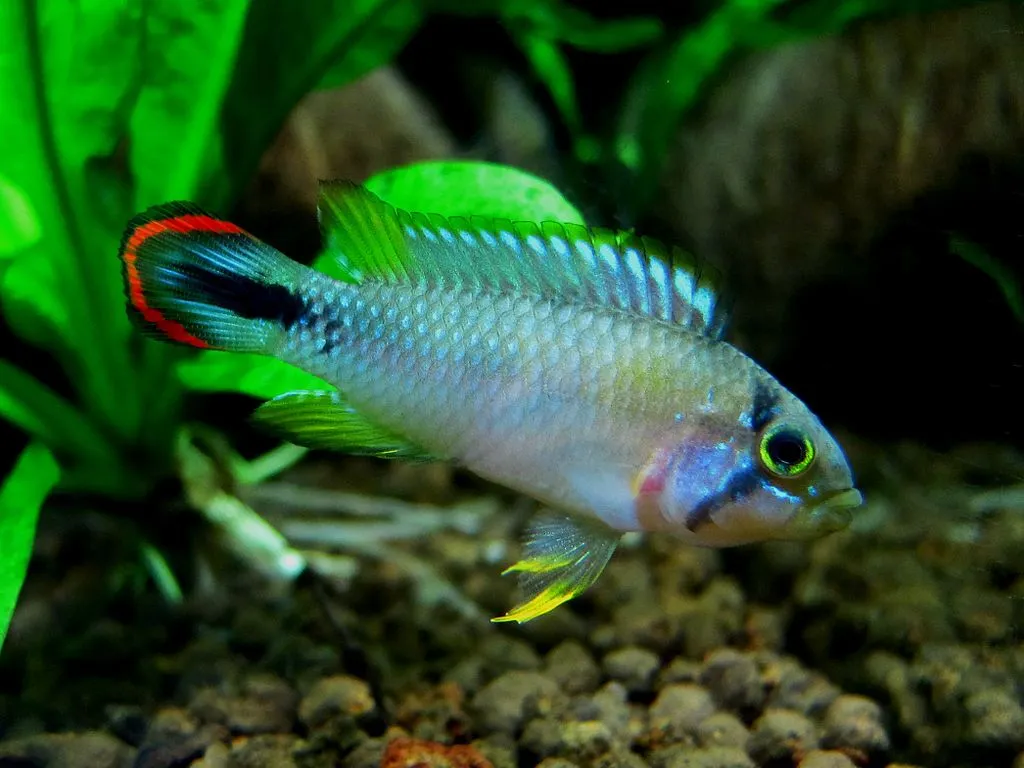
Apistogramma panduro is a small dwarf cichlid from the family Cichlidae, found in shallow forest streams and flooded areas of the Ucayali River basin in the Peruvian Amazon. In the wild, these fish inhabit soft, acidic waters littered with fallen leaves and submerged wood.
Males of A. panduro reach 5–6 cm in size and display a striking coloration: the body is painted in deep blue with a prominent dark blotch on the flank and vivid orange-yellow edges on the caudal fin. Females are smaller and more modestly colored in yellow tones with dark bars that become especially pronounced during spawning. With proper care, they live for 4–6 years.
This species is considered one of the more accessible dwarf cichlids for aquarium keeping. A. panduro is relatively peaceful, though it may show territorial behavior during breeding — a trait typical of all Apistogramma species.
Tank Requirements
A pair of Apistogramma panduro can be comfortably housed in a tank of at least 50 liters. Optimal water parameters are: temperature 24–28 °C, pH 5.0–7.0, and general hardness (GH) 1–10. These fish prefer soft, slightly acidic water — under such conditions they display their most vibrant colors and active behavior.
Use fine, dark substrate such as sand or small gravel. The aquarium should be furnished with plenty of hiding spots: ceramic caves, coconut shells, driftwood, and dense vegetation will create a comfortable environment. Indian almond leaves scattered on the bottom not only replicate the natural biotope but also gently acidify the water by releasing beneficial tannins.
Subdued lighting is preferred — floating plants will help create diffused light. Water flow should be gentle, so choose a filter with a soft output — a sponge filter works perfectly.
Feeding and Diet
Apistogramma panduro is an omnivorous species with a strong preference for protein-rich foods. The core diet should consist of live and frozen foods: brine shrimp, bloodworms, daphnia, and cyclops. High-quality micro pellets and flakes are also accepted but should not be the sole food source.
Feed small portions twice daily. A varied diet directly impacts color intensity and overall health. Occasionally adding spirulina-based foods supports the immune system.
Before spawning, increase the proportion of live foods — this helps stimulate breeding readiness.
Care and Maintenance
Apistogramma panduro is sensitive to water quality, making regular maintenance essential. Weekly water changes of 20–30% will help maintain stable parameters. Use test kits to monitor ammonia, nitrite, and nitrate levels — nitrates should be kept below 20 mg/l.
Filtration should be effective yet gentle. A sponge filter is an excellent choice: it provides biological filtration without creating strong currents. Vacuum the substrate carefully, avoiding disruption of hiding spots.
Watch for signs of stress: fading colors, reduced appetite, or rapid breathing may indicate water quality issues. With stable parameters and proper feeding, these fish rarely fall ill.
Compatibility
Apistogramma panduro coexists well with small, peaceful species that occupy the upper and middle water layers. Excellent tank mates include small tetras such as glowlight tetras and ember tetras, as well as small catfish like pygmy corydoras or otocinclus.
Keeping them with other dwarf cichlids in small tanks is not recommended — territorial conflicts are inevitable. In a spacious aquarium (100 liters or more), cohabitation with Apistogramma borellii may work, provided there are enough shelters and visual barriers.
Avoid large or aggressive fish, as well as very active species that may cause stress to these relatively calm cichlids.
Breeding
Breeding Apistogramma panduro is quite achievable in a home aquarium. They are cave spawners: the female deposits 40–80 eggs on the ceiling of a shelter — a cave, inverted coconut shell, or ceramic tube.
To trigger spawning, slightly lower the temperature by 1–2 °C during a water change and increase live food offerings. The water should be soft (GH 1–5) and acidic (pH 5.5–6.5).
After spawning, the female takes complete charge of egg care, developing a distinctive bright yellow coloration. The male guards the outer perimeter of the territory. Eggs hatch in 2–3 days, and the fry become free-swimming after another 4–5 days.
First foods for the fry include baby brine shrimp (artemia nauplii) and microworms. Gradually transition the juveniles to larger foods as they grow. The female actively tends to her brood for several weeks, so it is best not to disturb the family group during this period.